EuMuse, Music and the Space of Possibilities
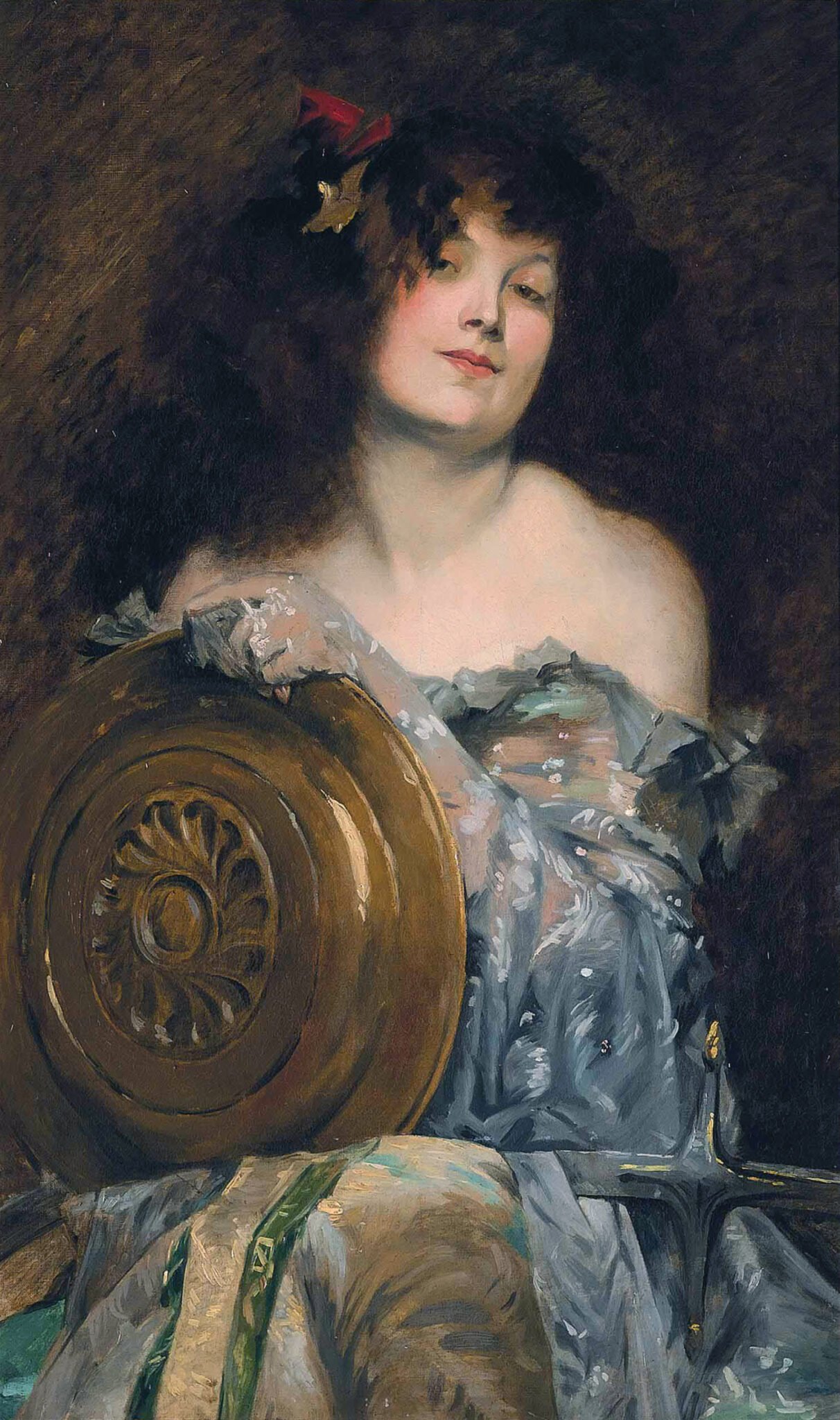
Juana Romani, Salomé, 1898.
“All nature is but art, unknown to thee;
All chance, direction, which thou canst not see; All discord, harmony not understood;
All partial evil, universal good.
And, spite of pride, in erring reason's spite,
One truth is clear, 'Whatever is, is right.”
Alexander Pope, (1688-1744), An Essay on Man
Countless inquiries into the source of music's power remain recorded in the works of world
philosophers, historians, poets, scientists, and musicians.
What is Music? Art, Science, Language?
Is there a power inherent in music itself, or is its influence the result of our cultural experience,
our own mental attitudes, and of our aesthetic development?
Why, when listening to music, do our bodies move, tap, and dance?
How does music evoke emotions?
Is this related to a unique correlation of music and the emotional brain, or is it culturally determined?
Is expert music based on education and training or genetics? Or is it both?
What are the effects of music listening and training on the brain?
Is music uniquely human? How do animals and plants sense and produce music?
Are there structures in the brain specific to the meaning of music?
Is dissonance based on the anatomy and physics of the ear? Or is it culturally based?
How do infants respond to pitch and melody?
How do babies simultaneously learn different musical rules from different cultures?

Ettore Tito, White bull, 1924.
“Al of this is a prelude to the song itself which must be learned.”
Plato (429?–347 B.C.E.)
Sounds You Cannot Hear
EuMuse seeks to unlock the transformative power of music to enhance well-being, creativity, and learning.
Conscious music listening, i.e., having music in our lives by choice and design, is a skill attained through the same deliberate practice as any other pursuit of human excellence. It should be regarded more as an action coming from insight than an activity. Listening to music then becomes something that aids inner transformation vs. something that fills our time.
Throughout history, philosophers, scientists, physicians, and polymaths have recognized that music is far more than an artistic expression—it is a structured phenomenon capable of influencing human biology through mathematical proportion, rhythm, and harmony.
Centuries before neuroimaging, Hippocrates, Pythagoras, Plato, Ibn Sina, and Asclepiades recognized that sound and rhythm possess a mathematical and emotional architecture capable of restoring harmony to the human body and mind.
From Ancient Greece to the Scientific Revolution and the emergence of modern physiology, thinkers including Damon of Athens, Aristotle, Boethius, Al-Farabi, Johannes Kepler, and Robert Fludd described music as a force that mirrors the order of the cosmos while restoring balance within the human body and mind. During the nineteenth century, pioneers such as Robert Brown, J. Diogel, Nikolai Tarchanoff, and Alexander Borodin advanced these ideas through empirical observation, demonstrating measurable effects of carefully designed musical interventions on cardiovascular, neurological, and emotional regulation.
EuMuse builds upon this remarkable intellectual lineage by integrating centuries of philosophical insight with contemporary musicology, neuroscience, psychology, and health sciences. Rather than treating music as entertainment or a generic wellness tool, EuMuse regards it as a tangible manifestation of deep laws in mathematics, fundamental physics, and cognitive science. Thus, the most novel, paradigm-shifting ideas highlight how music isn’t merely an artistic byproduct of human culture but an intrinsic lens for understanding the universe and the human mind.
Through Goal-Oriented Music Listening (GoML), it applies the principles of musical structure, resonance, rhythm, timbre, and harmonic organization to support emotional regulation, cognitive performance, and human flourishing. In doing so, EuMuse continues a tradition that views music as a profound medium connecting mathematics, beauty, ethics, and the living human organism.

Gustave Courbet, Portrait de Zélie Courbet, 1842.
“Appearances to the mind are of four kinds. Things either are what they appear to be; or they neither are, nor appear to be; or they are, and do not appear to be; or they are not, and yet appear to be. Rightly to aim in all these cases is the wise man’s task.”
Epictetus (55 AD-135 AD)
The Evolutionary Roots: Biomusicology
Key findings from biomusicology research indicate that listening to classical music exerts measurable healing effects across psychological, neurobiological, and physiological domains.
The medical literature demonstrates that receptive and intentional music listening, particularly when structured and goal-oriented, enhances neuroplasticity, upregulates neurotrophic factors, and improves cognitive flexibility and inhibitory control—key substrates for cognitive resilience and complex problem-solving in healthy adults.
Specifically, music listening was associated with relaxation and improved immune function, marked by the upregulation of genes related to neuroprotection and synaptic plasticity.
Our biological systems are fundamentally rhythmic—from our heartbeats and respiratory cycles to the circadian firing of neural networks. Biomusicology suggests that human musicality evolved as a primary tool for social cohesion, communication, and neurological regulation long before language existed. When we use music as medicine, we are tapping into a deeply hardwired evolutionary toolkit for homeostasis.
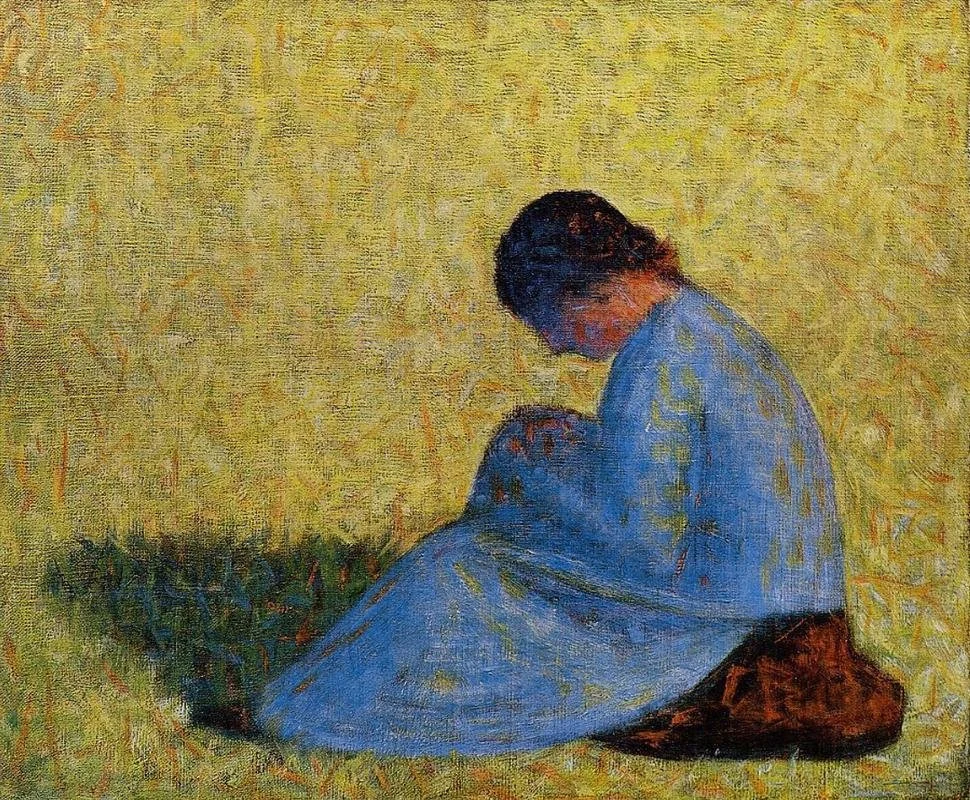
Georges Seurat woman seated in the grass, 1883.
“The mysteries of music have long inspired scientists to invent new tools of thought.”
Soul Perlmutter (b.1959-)
EuMuse Thinking: The Body as a Resonant Receiver
The EuMuse platform approaches music not merely as acoustic brain stimulation but as a cultural, social, and deeply biological phenomenon.
The Resonance Variable: Every bone, muscle, organ, and cell carries a distinct natural frequency. EuMuse posits that at these fundamental frequencies, the body absorbs acoustic energy most efficiently, optimizing cellular health and homeostasis.
Entrainment & Synchronization: This is the scientific process where the body's internal biological rhythms (like heart rate, brainwaves, or fluid movement) physically merge and synchronize with the external pulse of music.
The Body as a Harmonic Matrix: e.g., string theory cosmic model suggesting that all matter in the universe is composed of tiny, vibrating fundamental strings. Under this view, human bone conduction is not an accidental evolutionary quirk but our physical mechanism for plugging into the universe's broader "Theory of Everything".
Bodily Fluid Structuring: EuMuse highlights scientific research demonstrating that music directly impacts the physical structural quality of bodily fluids. Because we are mostly water, music literally shapes our internal chemistry in real time.

Jean-Baptiste-Simeon Chardin Self portrait with spectacles, 1771.
“You misinterpret everything, even the silence.”
Franz Kafka, (1883-1924), The Castle
Practical Implication
Music matters because it acts in real time on bodies and habits, but it also participates in larger questions of meaning, truth, beauty, and the good life.
Music is a time-art. There is no listening in the future, and there is no listening in the past, thus, mindful and goal-oriented music listening (GoML) helps us to consciously accumulate present moment awareness.
Music is not just something we hear but something that trains what we become. In resonance with Plato’s core idea that music forms character before it forms opinion: rhythm, harmony, and imitation shape the soul’s habits - musical education should cultivate intellectual readiness and a training environment for attention, emotion regulation, and social orientation.
Why? Because technological development must be matched by development in human consciousness, ethics, and emotional intelligence.
EuMuse is a science-driven platform for goal-oriented listening to music, on a mission to teach:
· How to integrate conscious music listening into everyday life · How to creatively alter your sonic environment · How to integrate conscious music listening in workplaces, wellness centers, hospitals, schools, and homes
In harmony with the Platonic-Ciceronian line, EuMuse suggests three practical ideas.
· First, repeated musical exposure matters because habits of listening shape habits of attention and response. · Second, institutions should treat music education as part of civic education, not as a decorative extra. · Third, the best musical culture is one that joins pleasure to discipline, emotion to form, and beauty to ethical orientation.
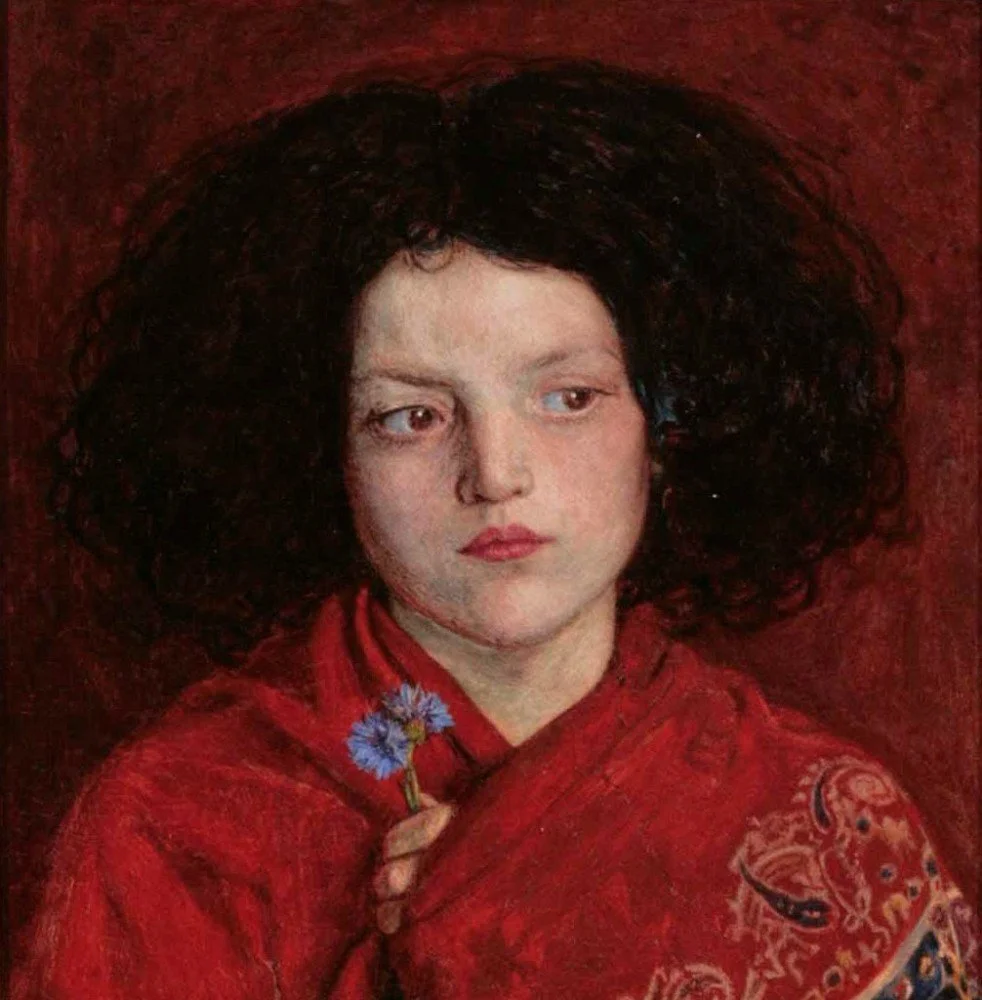
Ford Madox Brown, the Irish girl, 1860.
For when you go from a principle to execution, things are much more complicated: the output is simple to the outsider, the process is hard seen from the inside. Indeed, it takes years of study and practice. MDM
In cultivating a creative understanding of the music listening processes, EuMuse presents abundance as a practical outcome of practice, technology, and system change, not just an optimistic attitude. It comes, though, with one warning: you will not learn and grow if you don’t do the practice.
For when you go from a principle to execution, things are much more complicated: the output is simple to the outsider, the process is hard seen from the inside. Indeed, it takes years of study and practice.

Helene Schjerfbeck maria,1906.
The gift of music might be available to any individual, provided they are given the right exposure at the critical time. MDM
If things are going to constantly change, then what matters is not what you know, but how you're able to learn new things. Music literacy is a lot about learning – it is really about building capabilities in you, in the individual, that remain valuable even as the technology and tools evolve.
Modern science is discovering that we all have a faculty that had been thought to be confined to a few rare individuals with extraordinary talents. The gift of music might be available to any individual, provided they are given the right exposure at the critical time. And that raises the question, what other sort of abilities could be brought up if we only knew what to do. There may be much more human potential than we had realized.
Marina de Moses