Harmonizing Capital with Human Flourishing:
EuMuse’s Vision for Conscious Attention in a Fragmented World
Music has guided human thought for millennia—across disciplines, borders, and philosophies. EuMuse invites you to rediscover music as a force of wisdom.

Francisco de zurbarán
saint ursula,1635/40
“What is the use of that wonderful art, if it does not lead us to better living?”
Desiderius Erasmus (1469 /1466?/ - 1536)
Throughout history, music has occupied a unique position among human endeavors. It is simultaneously mathematical and emotional, biological and cultural, individual and collective. Yet only recently have scientific disciplines begun to investigate music not merely as an art form, but as a multidimensional force capable of influencing physiology, cognition, behavior, social organization, and lived experience.
The emerging fields represent a new intellectual frontier where musicology increasingly converges with neuroscience, genetics, medicine, architecture, anthropology, artificial intelligence, and systems science.

rogier van der weyden
Archangel Saint Michael Weighing Souls(detail),
1445-50
"The music is not the lyre nor the hand which plays upon it, but when the two meet, that arises which is neither, but gives each its place."
Margaret Fuller (1810-1850)
Emerging Sciences of Music:
Toward an Integrated Understanding of Sound, Music, and Human Flourishing
These fields are particularly important because they demonstrate combinatorial creativity: they connect disciplines that were historically isolated and transform abstract philosophical ideas about harmony, rhythm, resonance, embodiment, beauty, memory, and consciousness into measurable, applied realities.
Together they suggest a profound shift: from studying music as an object to understanding music as a dynamic relationship between sound, body, mind, environment, and meaning.
Archaeoacoustics - Sound, Space, and the Origins of Human Experience
Fundamental Inquiry - How did ancient civilizations understand the power of sound, and to what extent were sacred spaces intentionally designed to shape human perception and collective experience?
Convergence of Knowledge - Archaeoacoustics brings together archaeology, architecture, acoustics, anthropology, ritual studies, and musicology to explore the acoustic intelligence embedded within ancient environments.
What Has Been Revealed - Research has shown that many prehistoric caves, temples, ceremonial chambers, and theaters possess extraordinary acoustic properties. Resonant zones frequently coincide with sacred imagery, ritual pathways, and gathering spaces.
These findings suggest that ancient peoples may have recognized the transformative effects of resonance, reverberation, and vocal harmonics long before the emergence of modern acoustic science.
EuMuse Perspective - Archaeoacoustics reminds us that music does not exist independently of place. Listening is always embodied and situated. Sound, space, and human consciousness form an inseparable triad. The question becomes not merely what was heard, but how environments themselves became instruments of human development, memory, and meaning. Revisit - Resonance-the hidden architecture of mind and matter.
Sonogenetics - Sound as a Biological Messenger
Fundamental Inquiry - Can sound become a precise tool for influencing cellular and neurological activity?
Convergence of Knowledge - Sonogenetics unites genetics, neuroscience, acoustics, molecular biology, and bioengineering.
What Has Been Revealed - Scientists have demonstrated that specific ultrasound frequencies can activate genetically modified cells and neurons without invasive procedures. For the first time, sound is emerging not only as information perceived by the ear, but as a mechanism capable of interacting directly with biological systems.
EuMuse Perspective - While music and ultrasound occupy different domains, sonogenetics expands our understanding of acoustic influence. It invites a deeper question: To what extent might organized sound participate in biological regulation, adaptation, and healing processes that science is only beginning to understand?

louis janmot.
portrait of the artist, 1832
Every musical experience emerges through an interaction between acoustic reality and human interpretation. This reinforces the importance of intentional listening and thoughtful protocol design. EuMuse MDM
· Neuromusicology - Music and the Architecture of the Brain
Fundamental Inquiry - Why does music engage the human brain so profoundly and so universally?
Convergence of Knowledge - Neuromusicology combines neuroscience, cognitive psychology, linguistics, music theory, physiology, and computational modeling.
What Has Been Revealed - Music activates distributed neural networks involved in memory, emotion, attention, movement, prediction, and social cognition. Musical engagement has been shown to influence neuroplasticity throughout the lifespan.
EuMuse Perspective - The emerging evidence increasingly challenges the notion that music is a luxury or cultural ornament. Music appears instead as a biological technology for organizing perception, emotion, movement, and social connection.
· Biomusicology - The Evolutionary Roots of Musicality
Fundamental Inquiry - Why did music emerge within the human species?
Convergence of Knowledge - Biomusicology integrates evolutionary biology, anthropology, neuroscience, ethology, developmental psychology, and musicology.
What Has Been Revealed - Studies of infant communication, collective rhythm, vocal behavior, and cross-species musicality suggest that music may have deep evolutionary origins. Musical behaviors appear closely linked to bonding, cooperation, communication, and group cohesion.
EuMuse Perspective - Biomusicology reframes music not as an invention of civilization but as an expression of human nature itself. Music may be less a product of culture than a foundation upon which culture is built.

Ludwig Ferdinand Graf Girl from Concarneau, 1894.
“Beauty awakens the soul to act.”
Dante Alighieri (1265-1321)
· Psychoacoustics - The Science of Hearing and Perception
Fundamental Inquiry - How does the human brain transform physical vibrations into meaningful experience?
Convergence of Knowledge - Psychoacoustics brings together physics, neuroscience, psychology, engineering, and music theory.
What Has Been Revealed - Perception is not a passive recording of sound. The brain actively constructs auditory reality through expectation, pattern recognition, memory, and context.
EuMuse Perspective - The listener is never separate from the music. Every musical experience emerges through an interaction between acoustic reality and human interpretation. This reinforces the importance of intentional listening and thoughtful protocol design.
· Music Information Retrieval (MIR) - Understanding Music Through Artificial Intelligence
Fundamental Inquiry - Can computational systems identify and model the structures that make music meaningful?
Convergence of Knowledge - Artificial intelligence, signal processing, cognitive science, music theory, statistics, and data science.
What Has Been Revealed - Modern systems can identify patterns of rhythm, harmony, timbre, emotion, and listener preference.
EuMuse Perspective - The challenge is not merely technological. The deeper question concerns wisdom: Can data-driven analysis illuminate aspects of musical experience without reducing music to information alone? Technology should enhance human understanding, not replace it. Revisit - Beyond Algorithms: Cultivating Human Flourishing for AI Safety

Giuseppe De Nittis sarah bernhardt as pierrot, 1879.
Music is not solely an auditory phenomenon. It is simultaneously acoustic, tactile, physiological, and experiential. The body itself becomes part of the listening process. EuMuse MDM
· Vibroacoustic Science - The Body as a Resonant System
Fundamental Inquiry - What occurs when sound is experienced not only through hearing but through touch and vibration?
Convergence of Knowledge - Acoustics, physiology, rehabilitation medicine, neuroscience, mechanobiology, and music research.
What Has Been Revealed - Low-frequency vibration influences muscular tension, autonomic regulation, sensory processing, and bodily awareness.
EuMuse Perspective - Music is not solely an auditory phenomenon. It is simultaneously acoustic, tactile, physiological, and experiential. The body itself becomes part of the listening process.
· Cognitive Ethnomusicology - Music Across Cultures and Minds
Fundamental Inquiry - Which aspects of musical experience are universal, and which are shaped by culture?
Convergence of Knowledge - Anthropology, cognitive science, psychology, linguistics, ethnomusicology, and neuroscience.
What Has Been Revealed - Human responses to music reflect both shared biological foundations and culturally learned patterns.
EuMuse Perspective - Understanding music requires understanding humanity itself. Diversity in musical expression reveals multiple pathways through which sound acquires meaning.

Vasily Vereshchagin, Kyrgyz, 1870.
Human responses to music reflect both shared biological foundations and culturally learned patterns. EuMuse MDM
· Acoustic Ecology - The Sonic Environment and Human Wellbeing
Fundamental Inquiry - How do the soundscapes we inhabit shape our health, behavior, and quality of life?
Convergence of Knowledge - Environmental science, urban planning, acoustics, public health, ecology, psychology, and musicology.
What Has Been Revealed - Sound environments influence stress regulation, cognitive performance, sleep quality, cardiovascular health, and emotional wellbeing.
EuMuse Perspective - Sound environments shape civilization biologically and psychologically. Listening extends far beyond music. Every environment educates the nervous system. The sonic character of a place influences the character of the lives lived within it.
· Music-Based Neurorehabilitation - Rhythm as a Therapeutic Resource
Fundamental Inquiry - Can structured musical processes support recovery from neurological injury and disease?
Convergence of Knowledge - Neurology, rehabilitation science, motor learning, psychology, and music cognition.
What Has Been Revealed - Rhythmic entrainment can improve gait, coordination, speech recovery, and functional rehabilitation.
EuMuse Perspective - Music is increasingly recognized not merely as emotional support, but as a practical tool capable of facilitating measurable physiological outcomes.

Pietro Rotari Young Girl Writing a Love Letter, 1755/60
“My work has always tried to unite the True with the Beautiful and when I had to choose one or the other, I usually chose the Beautiful.”
Hermann Weyl (1885-1955)
· Chronobiological Music Research - Music and Biological Time
Fundamental Inquiry - How does music interact with the rhythms that govern life itself?
Convergence of Knowledge - Chronobiology, sleep science, endocrinology, neuroscience, behavioral medicine, and music research.
What Has Been Revealed - The timing of musical exposure may significantly influence physiological and psychological outcomes.
EuMuse Perspective - Music is not only about what is heard. Equally important is when it is heard. Listening may be understood as a temporal intervention within larger biological cycles.
· Mechanobiology and Sound - The Biology of Vibration
Fundamental Inquiry - How do living systems respond to mechanical forces, vibration, and resonance?
Convergence of Knowledge - Mechanobiology, cellular biology, biophysics, acoustics, physiology, and systems science.
What Has Been Revealed - Cells continuously respond to mechanical stimuli. Sound, as organized mechanical energy, enters a larger conversation about how living systems adapt to their environments. Revisit - Tuning the World - From the Music of Spheres to the Music of Cells
EuMuse Perspective - This field offers one of the most promising bridges between physical acoustics and biological response. It encourages a broader understanding of music as more than symbolic communication—as a physical phenomenon capable of participating in the embodied realities of life.
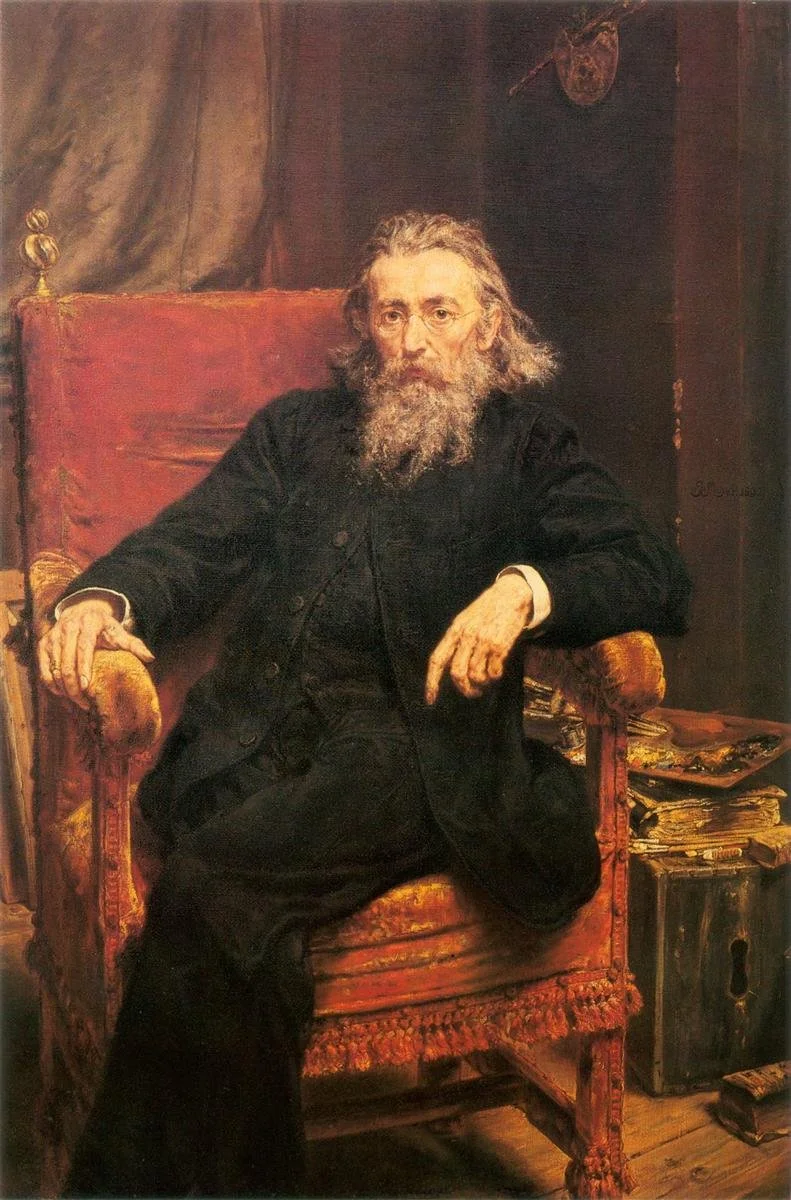
jan matejko
self-portrait, 1892.
Segui il tuo corso et lascia dir le genti “Follow your own road and let people talk”.
Dante Alighieri (1265-1321), Divine Comedy – Purgatorio
To Know or Not To Know
EuMuse Synthesis
Taken together, these emerging sciences point toward a renewed vision of music. Music is not merely entertainment. It is not merely culture. It is not merely therapy. Music may be understood as a uniquely human medium through which physical vibration becomes perception, perception becomes experience, experience becomes meaning, and meaning influences the development of individuals, communities, and civilizations.
The most significant discovery may not be found within any single discipline. Rather, it emerges from their convergence: that music exists at the meeting point of nature and culture, biology and imagination, measurable processes and lived experience.
Staying Human
For EuMuse, this convergence represents a new scientific-humanistic frontier—one in which rigorous evidence, philosophical inquiry, ethical responsibility, aesthetic sensitivity, and practical application become partners in understanding the role of music in human flourishing. Thus, the music’s highest use remains deeply human and humane.
Marina de Moses

Raphael, self-portrait, 1499.
Music, Beauty, Goodness, and Truth
“In summary, Marina de Moses radiates the profile of a *principled polymath* who bridges timeless humanistic values with rigorous contemporary insight. Her philosophy centers on music as a disciplined, ethical practice for reshaping inner and outer worlds — demanding expertise, intentionality, and a commitment to beauty, truth, and human depth in an increasingly fragmented age. The writings convey intellectual depth, cultural sensitivity, practical optimism, and a quiet urgency about the sonic and mental environments we create.”