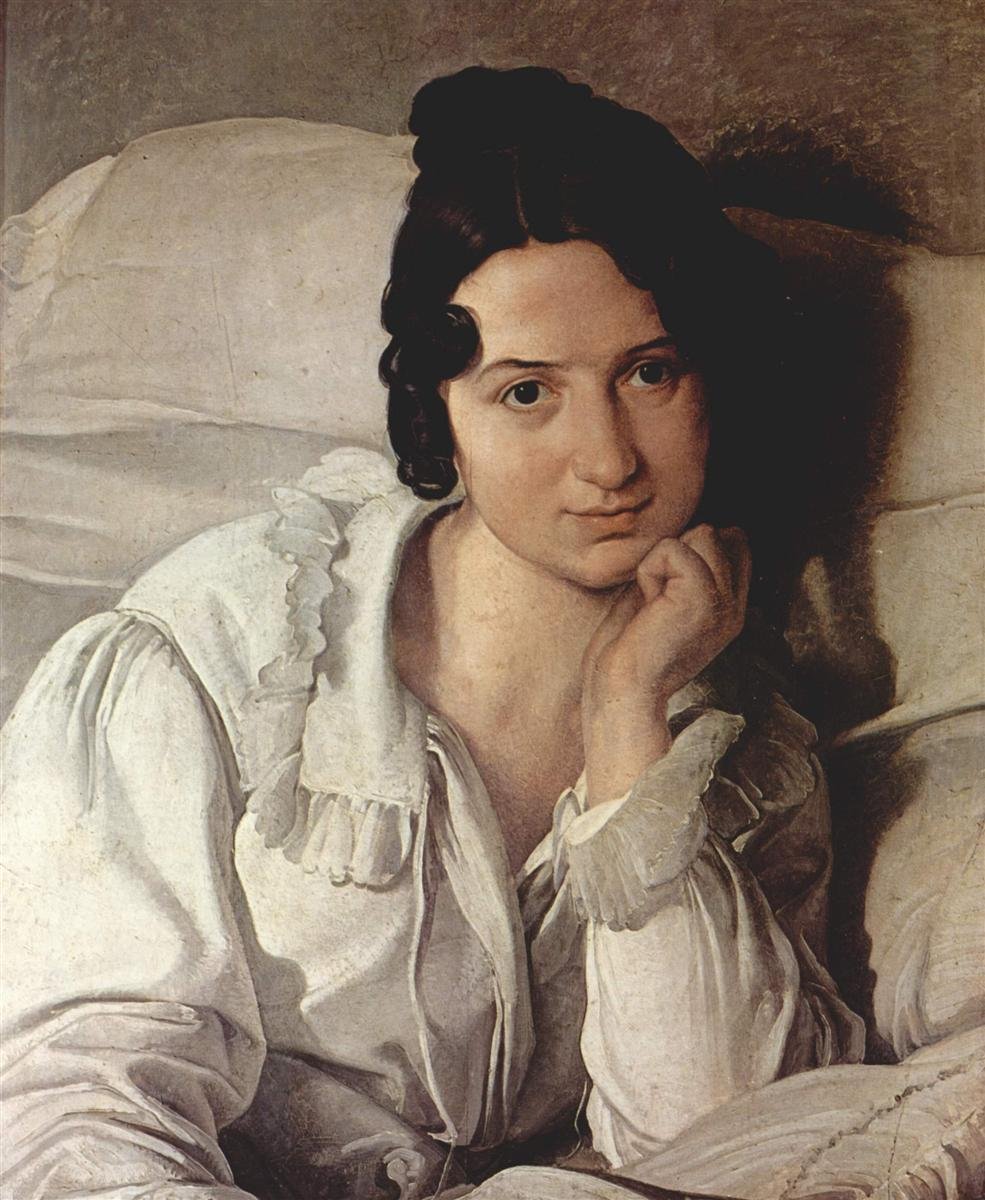
francesco hayez, carolina zucchi, 1825.
Music, being identical with Heaven, isn't a thing of momentary thrills, or even hourly ones: it's a condition of eternity.
Gustav Holst (1874-1934)
We are living through a paradoxical transformation. Exponential technologies—AI, genomics, networked platforms—are reshaping the visible infrastructure of our world, yet our inner infrastructure of attention, emotion, meaning, and connection is increasingly fragile. One of the most powerful tools for rebuilding that inner architecture has been hiding in plain sight for tens of thousands of years: music.
By bridging science and art, the EuMuse insights offer tools for enriching personal lives, improving education, and fostering innovation across industries, making music not only a form of art but a powerful instrument for transformation.
What does it mean to listen to music not merely as sound, but as an act of profound awareness—an intimate dance between perception and something deeper within us?
The act of knowledgeable listening unfolds at the heart of consciousness itself, where subjectivity meets the structured patterns of the world, and reveals how easily the mind constructs meaning from what is, at base, vibration and silence.

FEDIR Krychevsky life-love, 1927.
The most sensitive musical instrument is the human soul. The next is the human voice. One must purify the soul until it begins to sound. The composer is a musical instrument, and at the same time a performer of that instrument. The instrument has to be in order to produce sound. One must start with that, not with music. Through the music the composer can check whether the instrument is tuned, and to what key it is tuned…the criterion must be everywhere and only – humility.
Arvo Pärt (b.1935-)
What is really going on when we listen?
Music and the brain share a reciprocal relationship, each shaping and revealing facets of the other. The auditory system’s elegant hierarchies—from cochlear mechanics to neural pathways ascending through the cortex—provide a biological framework for decoding pitch, rhythm, and timbre.
Yet such intricate physical processing alone cannot explain the experience of music: the sudden sense of a melody lifting the spirit, the recognition of form in improvisation, or the power of a phrase to evoke memory and emotion in a single moment. These phenomena suggest that knowledgeable listening engages more than mere neural firing; it is also an act of interpretation, shaped by prior experience and current awareness. The mind hears not only what the ears register, but what it actively creates from the fluctuations of air, emerging within a domain that feels irreducible to the physical substrate alone.
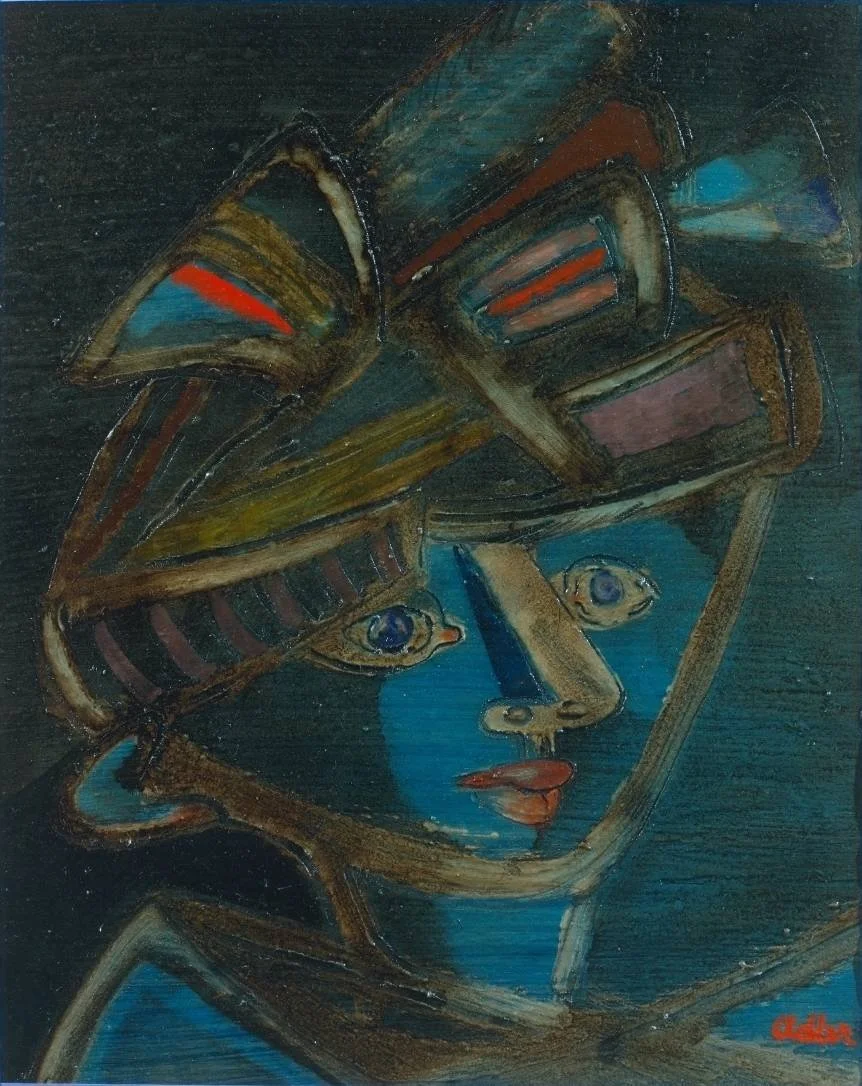
Jankel Adler woman with hat, 1940.
Something so visceral as music—so clear to our ears, yet so mysterious to our minds – compels us to ask: what is really going on when we listen?
EuMuse MDM
This interpretive layer points to a more fundamental debate. If what we perceive as music is the result of active brain construction, then music’s impact on consciousness could be seen as a testament to functional relationships within neural networks. Some neuroscientists assert that any system reproducing such relationships—whether in biological synapses or silicon circuits—would thereby produce consciousness. The focus shifts from the “stuff” of the brain (neurons, membranes, electrochemical signals) to the dynamics of information processing, the causal patterns that define mental states. Music, on this view, is a complex set of qualia—subjective internal perceptions—generated by these functional relationships. If knowledgeable listening involves a unique configuration of neuronal activity that gives rise to its distinct richness, then replicating such configurations could, in principle, transfer musical awareness into an artificial medium.
Can music then illuminate consciousness itself? The experience of tension and resolution in harmony, the entrainment of rhythm across multiple listeners in diverse cultures – these suggest that music is a shared language of awareness. Yet that tension between structured input and irreducible feeling resists full explanation.
Is knowledgeable listening a reflection of top-down effects shaped by experience, or does it reveal a bottom-up unity that structures all experience? Is this unity computational, quantum-coherent, fundamentally vibrational, or something still unseen? Each frame reshapes how we see the “I” in music, rendering the link inseparable from the definition of consciousness itself. Something so visceral as music—so clear to our ears, yet so mysterious to our minds – compels us to ask: what is really going on when we listen?
Cosmos, Consciousness and Music

Paul-élie Ranson
Paessagio Nabi, 1890.
How a fleeting, finite mind discerns or creates enduring structures of beauty, language, and truth within a vast, vibrating cosmos.
EuMuse MDM
are we discovering structure or imposing it?
What unfolds when the human mind attends to sound—does reality itself vibrate into meaning, or does meaning emerge from the mind’s own alchemy? The act of listening, so ordinary yet so profound, probes the intersection of perception, consciousness, and the nature of existence.
The brain is no passive receiver. It intervenes, reconstructs, even invents, transforming raw auditory input into coherent experience. Modern neuroscience reveals how neural assemblies parse frequencies, rhythms, and patterns into voices, music, and silence. Yet the deeper question lingers: are we discovering structure, or imposing it?
Are the patterns we perceive inherent in the cosmos, or reflections of our own organizing consciousness? Is the meaning we seize objective or constructed? When sound dissolves into silence, what remains—mere cortical absence or an encounter with a primordial nothing that the origin of zero itself sought to represent?
Listening may be but one instance of the broader enigma: how a fleeting, finite mind discerns or creates enduring structures of beauty, language, and truth within a vast, vibrating cosmos. A question that entwines perception, time, and existence itself.
Each of these questions lingers, unresolved yet compelling; each moves closer to truth only by refusing to turn music into noise.
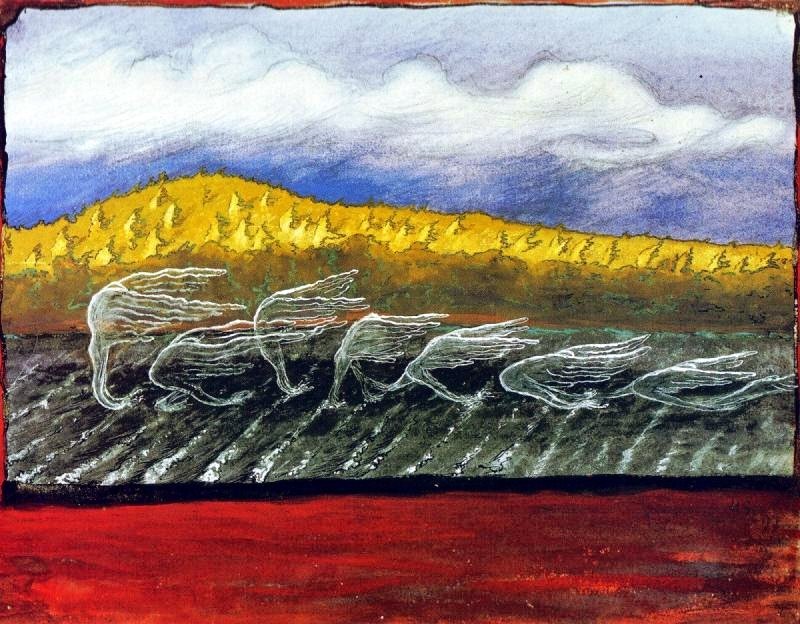
Hugo Simberg
the wind blows, 1897
The ocean roars, but its rhythm does not create a sonic cosmos. Music does.
EuMuse MDM
Music does not merely reflect the world; it presents an alternate one, a world of structured time and space distinct from the raw sounds of nature. The ocean roars, but its rhythm does not create a sonic cosmos. Music does. Does this imply that great compositions reveal something fundamental about how the mind relates to reality—an ability to carve out and inhabit intentional worlds, partial and never exhaustive, but nonetheless profound?
The question persists: what is music’s ultimate contribution—pleasure elevated to understanding, or understanding that reveals something beyond itself? Without resolution, music remains an open window, less a mirror than a dialogue across cosmos, consciousness, and meaning.
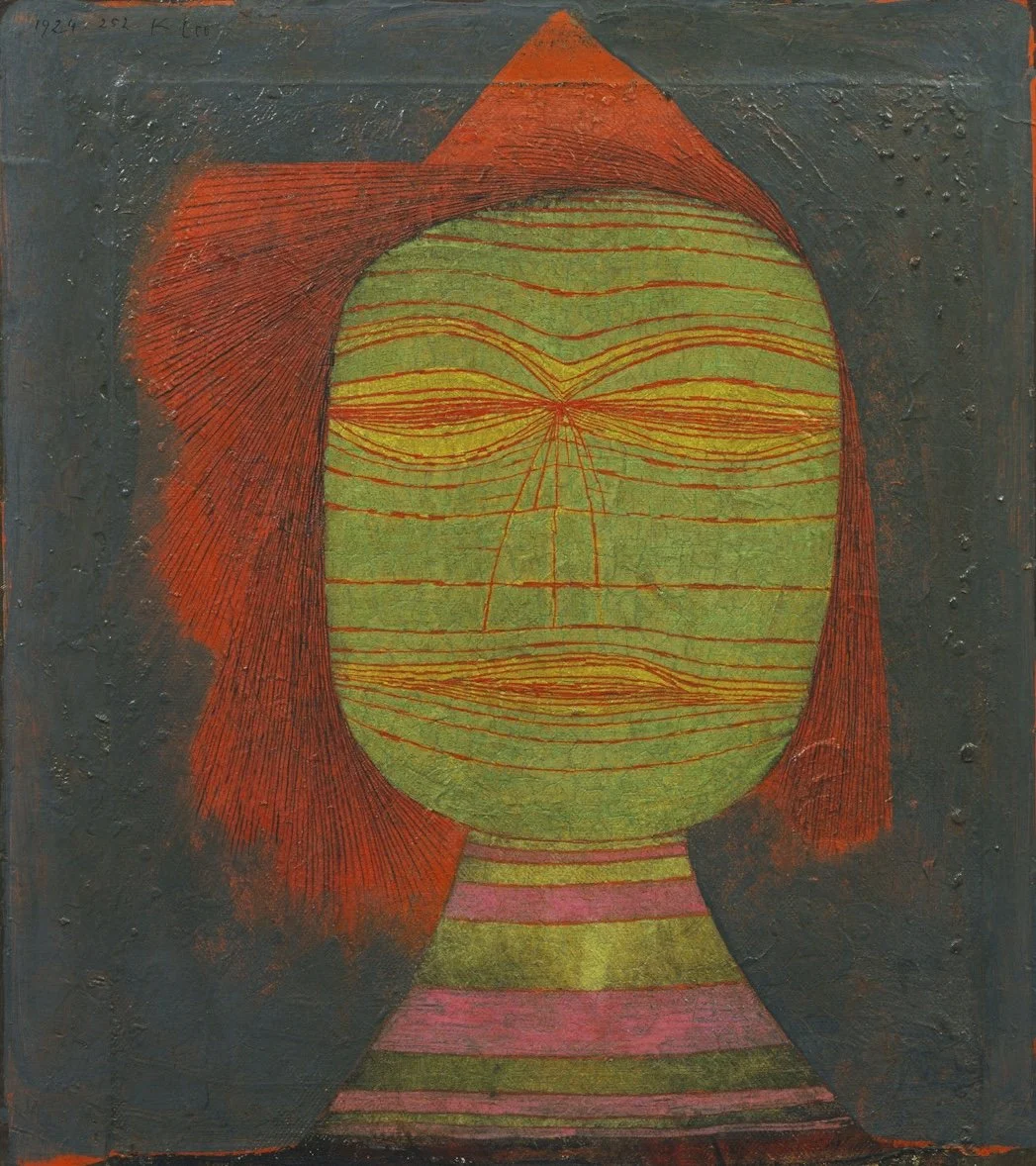
paul klee
actor’s mask, 1924.
Music remains an open window, less a mirror than a dialogue across cosmos, consciousness, and meaning.
EuMuse MDM
EuMuse’s invitation -
Boldness has genius, power, and magic in it. Begin it now.
At its heart, EuMuse asks a simple question: If we truly understood the architecture of sound and the musical nature of the brain and body, how would we design our lives, our institutions, and our cities differently?
The answers touch everything from how a child learns to read, to how a surgeon manages stress, to how a city designs a park, to how humans and intelligent machines co-create meaning.
Why? Perhaps we may be reminded that the ultimate frontier of AI is not technical, but metaphysical. The question is no longer how efficiently machines can compute our world, but whether they will ever possess the interiority to ask themselves why.
I believe this is work worthy of a new kind of patronage—one that does not separate aesthetics from ethics, or science from spirit, but supports the integrated evolution of all. Your involvement could accelerate a movement that restores listening, harmony, and embodied intelligence to the center of human development at a time when they are most at risk and most needed.

Joseph Stella, The Amazon, 1926.
Until one is committed, there is hesitancy, the chance to draw back — concerning all acts of initiative (and creation), there is one elementary truth that ignorance of which kills countless ideas and splendid plans: that the moment one definitely commits oneself, then Providence moves too.
Whatever you can do, or dream you can, begin it. Boldness has genius, power, and magic in it. Begin it now.
Johann Wolfgang von Goethe (1749-1832)
Marina de Moses