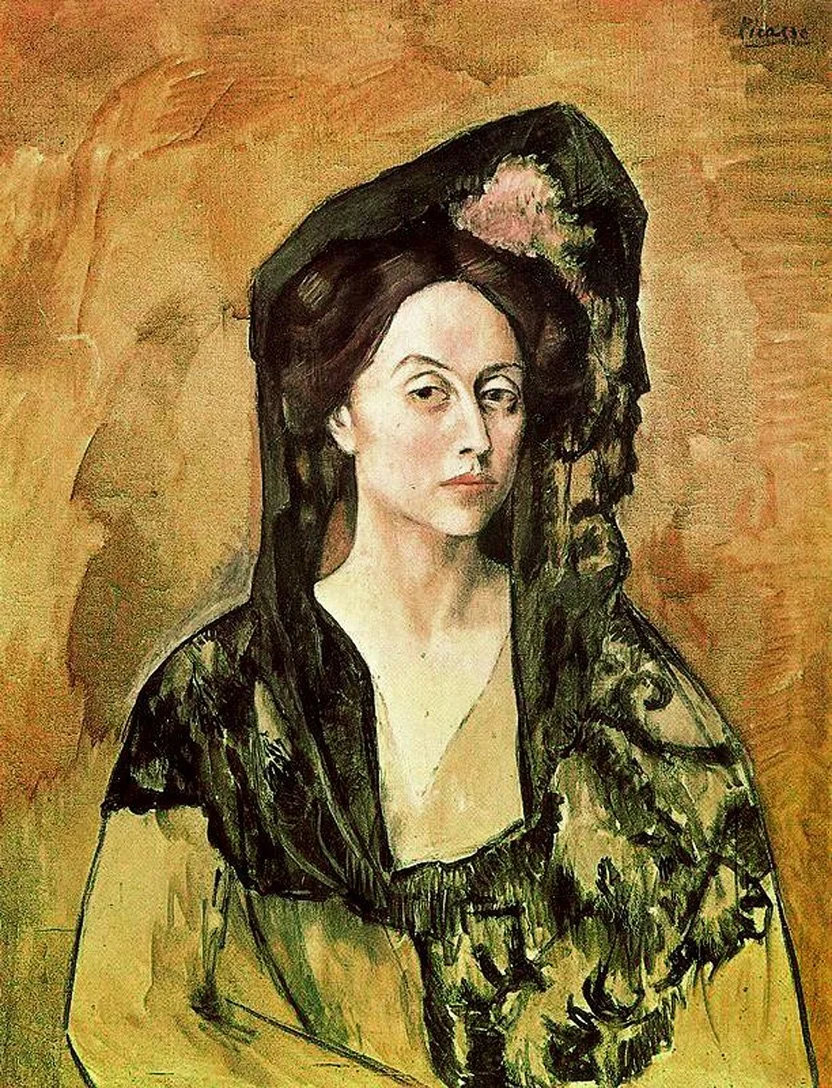
Pablo Picasso Portrait of Madame Canals, 1905
“Art interests me greatly, but the truth interests me infinitely more.”
Alberto Giacometti, (1901 - 1966)
The Emperor Has No Music
The powers of music are manifold—at times uncannily potent—and still far from fully understood. They may be cultivated toward human flourishing or misdirected toward manipulation, distraction, and harm. To neglect their conscious and constructive use is to forfeit one of our most profound resources for individual and collective life. To ignore their force is to do so at our peril. EuMuse begins from the conviction that a more conscious, ethical, and constructive engagement with music is not a luxury but a human necessity.
Music can support individual well-being and social order not because it carries an automatic moral force, but because it organizes attention, feeling, memory, bodily coordination, imagination, and shared identity. From Cicero to Schopenhauer, the enduring question is how musical experience forms a person’s inner life and how collective musical practices can either strengthen civic relations or intensify exclusion, conformity, and political manipulation.
Music is neither merely private entertainment nor an independent moral cure. It is a powerful social and psychological medium whose effects depend on musical structure, listening mode, personal history, cultural meaning, institutional setting, and relations of power.

William adolphe bougureau
Head of an Italian girl with a laurel wreath, 1872
"The taste of the apple lies in the contact of the fruit with the palate, not in the fruit itself; … Who knows? No matter. When I hear it play I am. I want to be. I bleed away”
Jorge Luis Borges (1899-1986)
How to Balance Use of Technology With Meaningful Human Interaction
How a society organizes music reveals how it organizes time, value, memory, labor, access, and power.
A culture of incessant sonic consumption may weaken sustained attention. By contrast, when music is practiced as a social and intellectual activity – through attentive listening, learning to play an instrument, singing together, studying musical traditions, and passing music between generations – it may strengthen capacities that democratic and civic life depend upon; timing, i.e., listening before responding, memory - remembering what others have contributed; mutual responsiveness; disciplined freedom; and belonging to a collective form while retaining one’s own voice.
This makes the history of musical thought more than a history of aesthetics. It is a history of humanity thinking about order, consciousness, society, and power through sound.
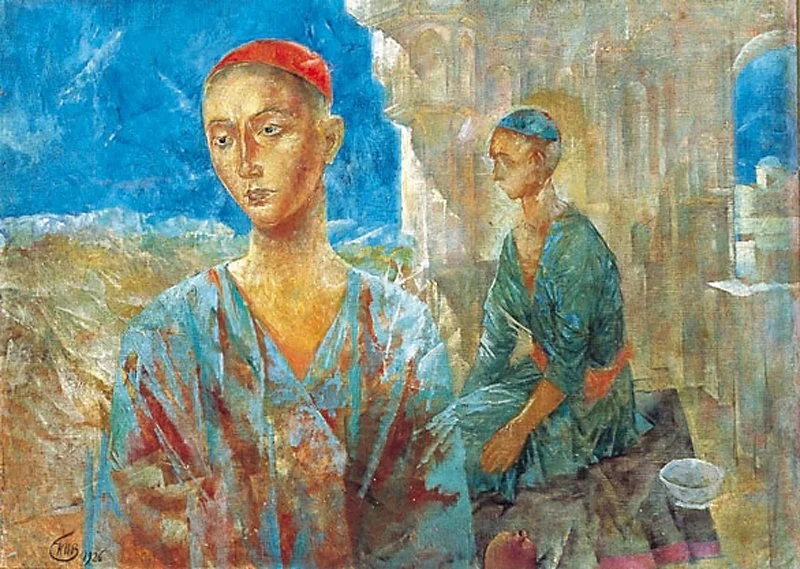
Kuzma Petrov Vodkin
samarkand,1926
Music begins. Your silence, deepen that. Were you to put words with this we would not survive the song.
Rumi (1207-1273)
EuMuse Invites Reflection on the Boundaries of Human Knowledge of Sonic Reality
Music, like a book, is not just another thing/amusement. It is a technology for transmitting ideas and truths through geography of space and time. Turning complex musical composition, art, or history into clickbait is dangerous. What is at stake is not just art, beauty, history, or truth. It is the essence of humanity.
Sounds enter us involuntarily. As sound passes through the ears, it stops being a physical phenomenon and becomes a matter of perception. What we hear is almost by rule different from what is actually sounding, due to the peculiarities and limitations of our hearing. And what we hear can largely differ from what we think we are listening to, due to the many tricks that perception plays on our awareness.
A work of music was never meant to exist merely as a fleeting digital blip, consumed and discarded within an endless stream of content. Headphones and earbuds can offer intimacy and concentration, but they should not become the default condition of musical life. Music is an event in time and space. It resounds, reverberates, and inhabits the acoustic world around us; it can resonate in a body and a room and become part of a shared experience.
Unfortunately modern education (including musical) often pursues trivia, not the Trivium. The trivium (grammar, logic, and rhetoric) and quadrivium (arithmetic, astronomy, music, and geometry) are disciplines rooted in ancient Greek and Roman traditions and formalized in the early Middle Ages. They served as the foundational training for intellectual development to speak with clarity and see the relations between things. Trivium, commonly called the “Arts of the Word”, focuses on different ways one can attend to words. All of them move toward a proper presentation of the truth. For example, the designation ''person” is related to the Latin personare, to sound through; the word notare (notes) means to write, to sound. In German, e.g., the word Vernunft (reason, intelligence) originates from vernehmen, to hear. One may take these examples not simply as an interesting enumeration of linguistic acoustics but as evidence of the basically auditory mood of some of our most important concepts.
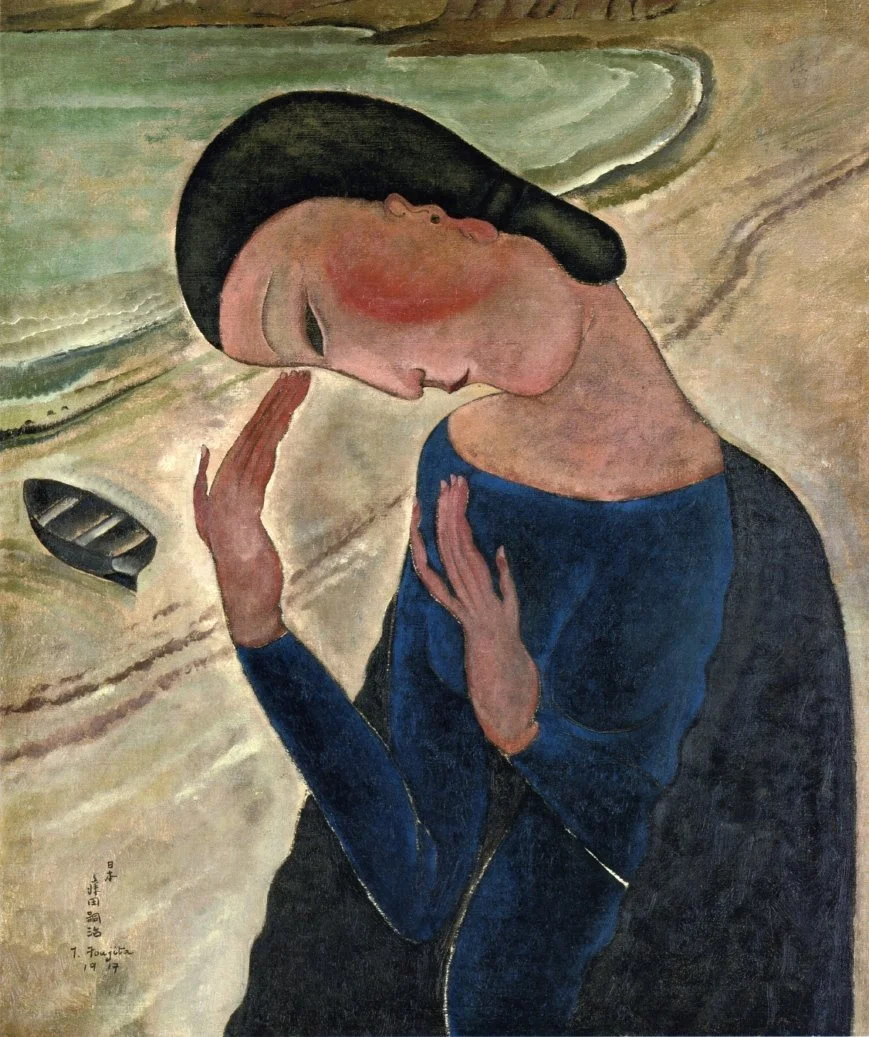
Tsuguharu Foujita la vie, 1917
"Every illness is a musical problem, healing a musical resolution."
Novalis, Georg Philipp Friedrich Freiherr von Hardenberg (1772-1801)
Harmony Is Not Conformity
A serious well-being framework should make room for a deeper register of experience. Well-being is not a condition of uninterrupted pleasant effect. It also involves the ability to bear ambiguity, encounter sorrow without collapse, and experience form where life feels formless – through music, reflection, and relationships amid experiences of disorder.
This does not mean commercial music is necessarily trivial or harmful, nor that a complex music piece is inherently emancipatory. It means that listening is not innocent of political economy. Platforms, recommendation systems, advertising, rights ownership, etc. influence what can be heard and what kinds of listening are encouraged.
A contemporary update would examine streaming platforms, algorithmic recommendations, generative AI, and music data extraction. The relevant social question is not only “What kind of music is popular?” but “Who owns the channels of audibility, who is trained to listen, and who can participate in making culture?”
Harmony is not conformity. It is the art of keeping many voices audible without allowing any one of them to become the whole.
The practical task in the EuMuse process is not to select universally “calming” or “uplifting” pieces. It is to develop musical discernment. What makes power more effective is not coercion but the automatism of habit.
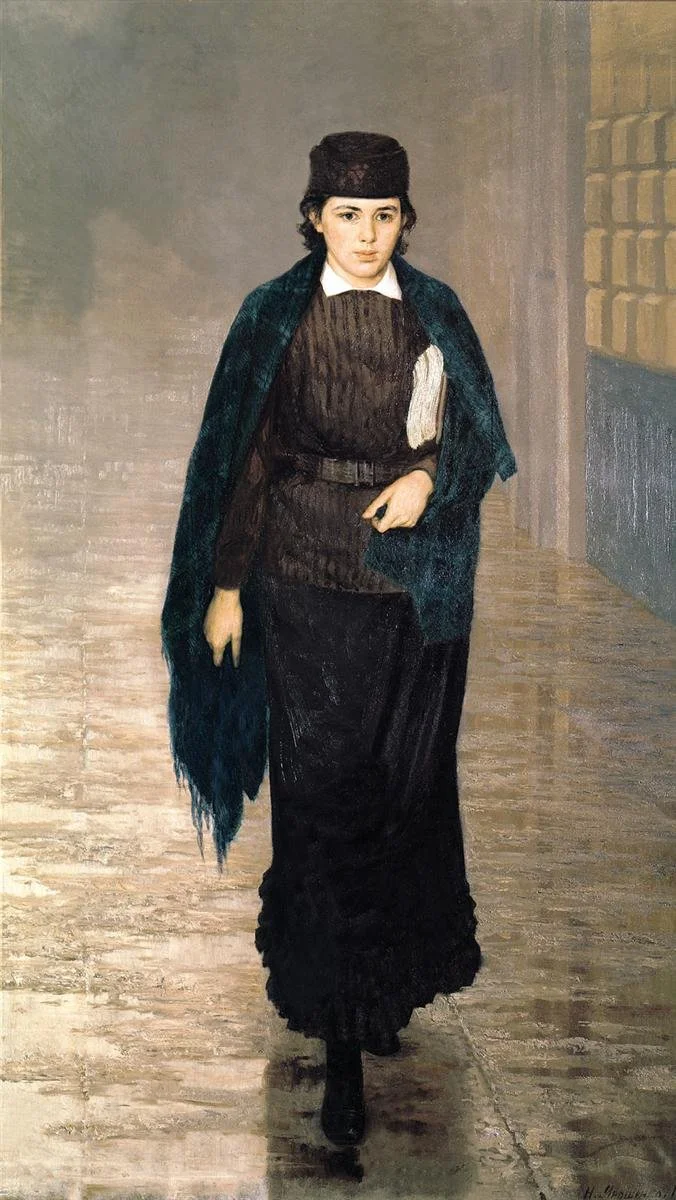
Mykola Yaroshenko girl-student, 1880
"One could as well call the world embodied music as embodied will"
Arthur Schopenhauer (1788-1860)
Music as an Architecture of Social Order
Music and social order have been conceived, across civilizations, as reciprocal tunings of the same instrument.
Pythagoras discovered that consonant intervals arise from simple numerical ratios; the cosmos itself was therefore a vast monochord. Cicero translated the insight into political imagination: the statesman who has heard the planetary harmony returns to earth with a standard against which human institutions can be measured. Medieval thinkers systematized the idea into the three levels of music. Renaissance polymaths such as Kepler sought the same proportions in planetary motion. Schopenhauer radicalized it: music does not represent the world of Ideas but is a direct copy of the Will itself, the most universal language available to human consciousness. Hans Kayser, writing in the mid-twentieth century, restored the Pythagorean program as a rigorous harmonics of tone-number, insisting that measure without value is incomplete and that the ear can recover norms the purely visual sciences have forgotten.
East Asian civilizations developed a parallel architecture of thought. Confucian theory and the classical *yayue* system treated music as one of the two great instruments of social cultivation, the other being ritual. Music softens and unites; rites clarify roles. Proper court music was used to cultivate the virtues necessary for stable governance; disordered modes were understood as both a symptom and cause of political decay.
African oral-knowledge systems, particularly the hereditary griot traditions of West Africa and related cultures, embody the principle in continuous practice. Griots are historians, genealogists, mediators, and musicians. Their art simultaneously entertains, advises, reconciles, and reaffirms the continuity of the social body with its ancestral and cosmic ground; music is a living archive and a technology of social regulation.
Thus, EuMuse guiding thoughts resonate with music becoming significant for well-being and social order when:
it educates attention without colonizing/occupying it;
intensifies feeling without making feeling sovereign;
builds common worlds without erasing uniqueness and difference;
gives beauty a place without allowing beauty to become an excuse for domination.
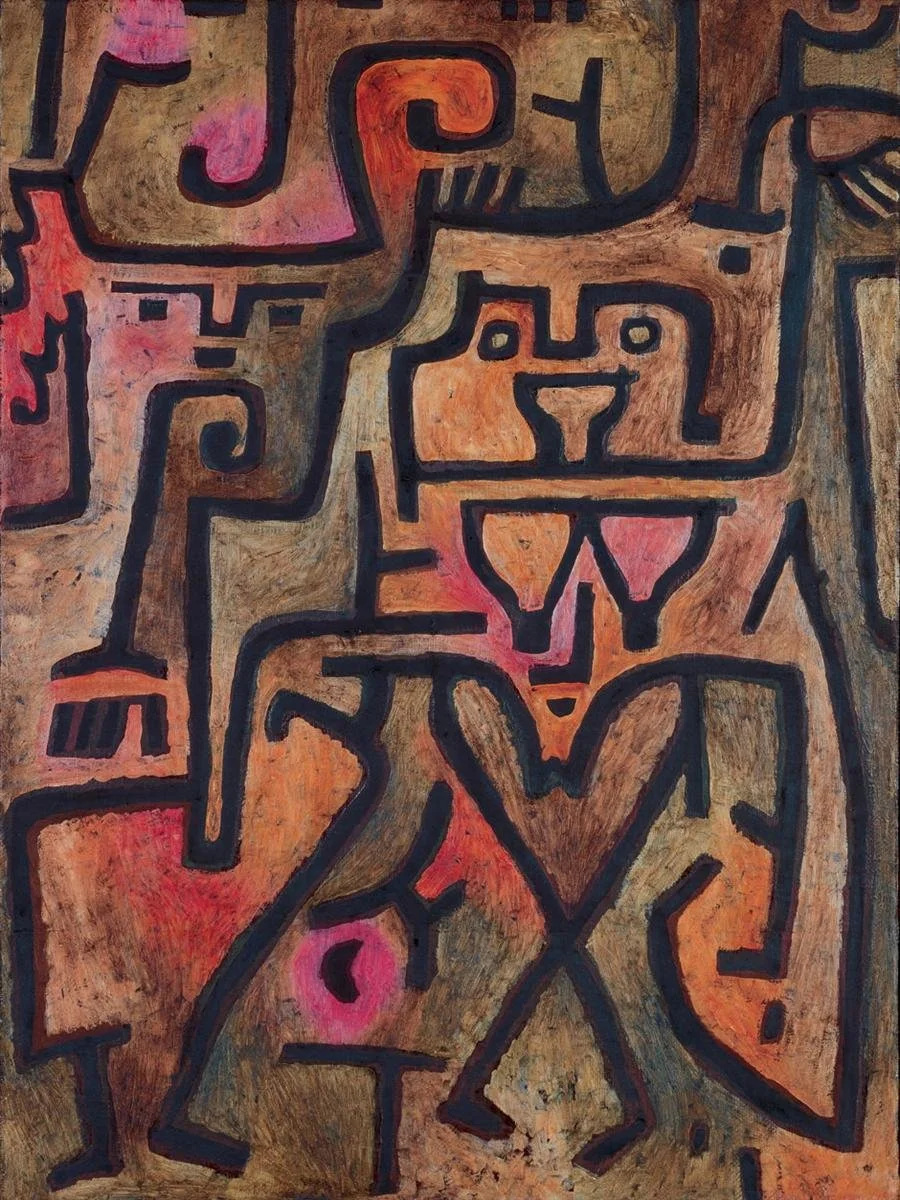
Paul Klee
forest-witch, 1938
Know Thyself!
One of the three principal Delphic maxims, ancient moral precepts inscribed on the Temple of Apollo at the sanctuary of Delphi in central Greece; 6th century BCE
Music – The Hidden Operating System of Civilization
Launched aboard Voyager 1 and 2 in 1977, the Golden Record is one of humanity’s most eloquent affirmations that music belongs to civilization’s deepest language.
Engineered to endure for billions of years in interstellar space, its 27 musical selections span classical, folk, indigenous, popular, and traditional music from across the world.
The record does not present music as decoration or national prestige but as evidence of human imagination, memory, joy, grief, ritual, and shared creative capacity.
Marina de Moses
One of the 27 musical selections on the Golden Record launched aboard Voyager in 1977.