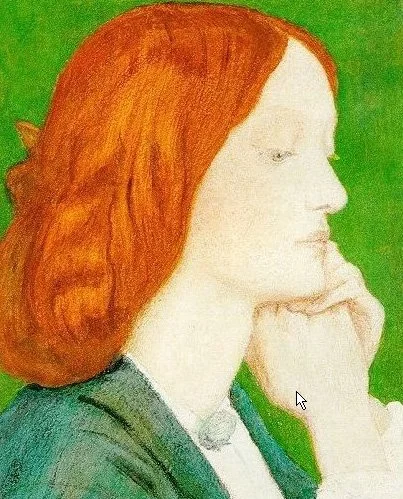
Dante gabriel rossetti
elizabeth siddal, 1854.
“The power to see does not come from the eye, the power to hear does not come from the ear, nor the power to feel from the nerves; but it is the spirit of man that sees through the eye, hears with the ear, and feels by means of the nerves. Wisdom and reason and thought are not contained in the brain, but belong to the invisible and universal spirit which feels through the heart and thinks by means of the brain.” Paracelsus (1493-1541)
Eppur si muove ("and yet it moves")
Eppur si sente ("and yet it is heard")
Attention Changes the World
Music possesses powers both subtle and immense: powers that move feeling, shape attention, awaken memory, bind communities, and alter the very atmosphere of thought. Such powers may heal or harm, clarify or obscure, liberate or control.
Much about these powers remains mysterious. Yet they are never inconsequential. They can be used wisely or misused carelessly. EuMuse begins from the conviction that a more conscious, ethical, and constructive engagement with music is not a luxury, but a human necessity.
At EuMuse, we aim to carry forward the art and science of music’s power and beauty while sustaining the virtue of open-minded humility.
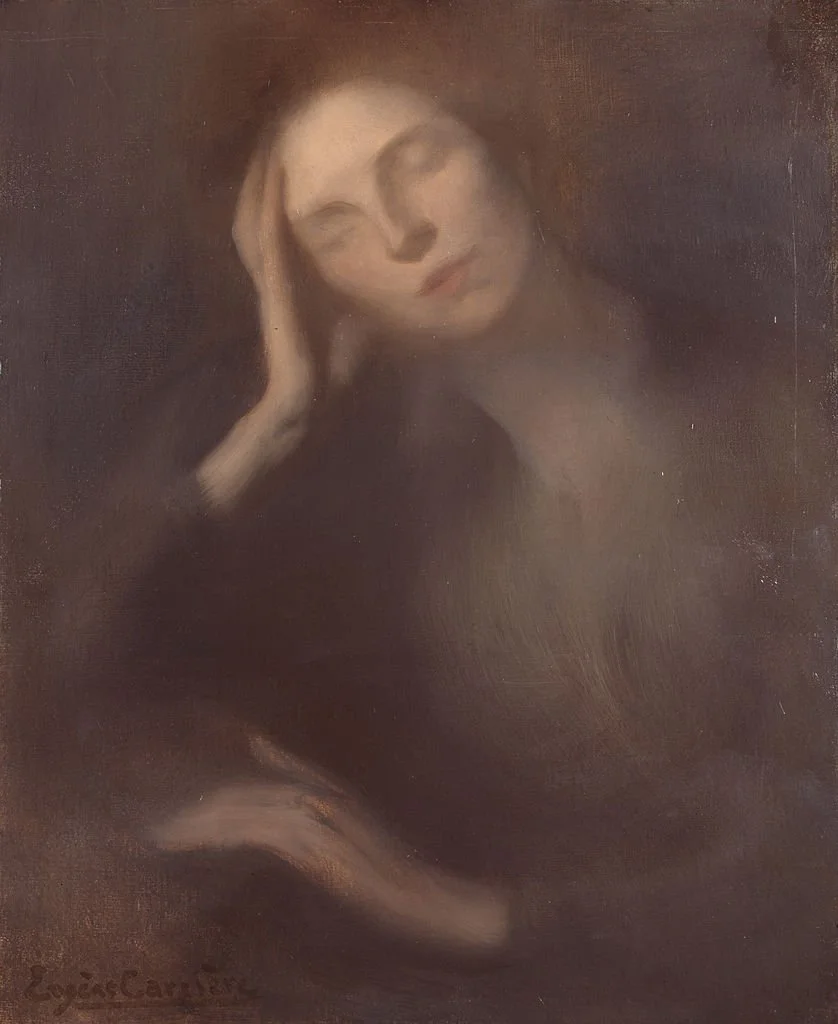
eugene carriere
woman leaning on a table, 1893.
“Yes, a key can lie forever in the place where the locksmith left it, and never be used to open the lock the master forged it for.”
Ludwig Wittgenstein
(1889-1951)
Confronting the Poverty of Beauty and Purpose
Confronting the poverty of beauty and purpose means restoring our capacity for wonder, discernment and imagination—and recognizing that what enriches human life cannot always be measured, optimized, or reduced to immediate usefulness.
While depression, anxiety and sleep deprivation are increasingly recognized as global public health concerns, there remains insufficient awareness of the connections between music, aesthetic experience, and inner well-being—and of how individual wellbeing is inseparable from the social, cultural, and physical environments we create. This disconnect operates at personal, local, and global levels.
There is, moreover, a cost to the impoverishment of our everyday musical and aesthetic environments. When public spaces become saturated with incessant entertainment sounds, undifferentiated music and noise, our capacity for attentive listening, concentration, and aesthetic discernment may gradually diminish.
The issue is not simply what we hear but what we become accustomed to hearing, and what this does to our capacity to listen, think and feel. People whose sensibility is destroyed by "music," i.e., entertainment sounds in public places, cannot concentrate on a J.S. Bach fugue.
A society may grow wealthier, faster and more technologically accomplished while becoming poorer in imagination, sensitivity and its ability to recognize what is truly worth pursuing.
Our understanding of the need for beauty, too, has become distorted: increasingly reduced to commercialized standards of appearance and consumption, fueled by algorithmic, filtered “beauty” ideals causing widespread body dissatisfaction, anxiety, and depression. Perhaps the task ahead is to recover the wisdom to ask: What kind of world are we creating, and what kind of human beings are we becoming?
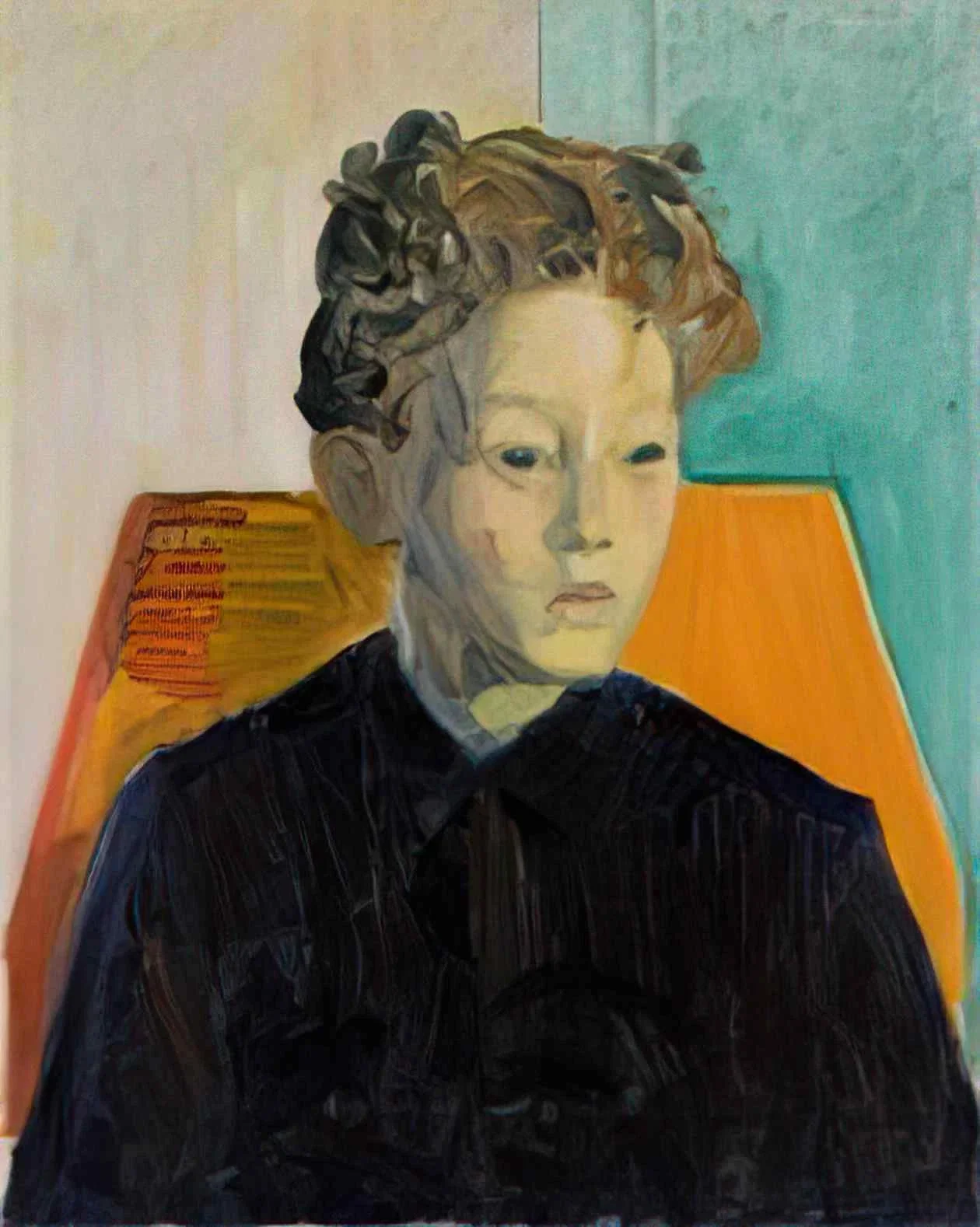
Cuno Amiet
Portrait d'Alberto, 1910.
“Since the days of revelation, in fact, the same four corrupting errors have been made over and over again: submission to faulty and unworthy authority; submission to what it was customary to believe; submission to the prejudices of the mob; and worst of all, concealment of ignorance by a false show of unheld knowledge, for no better reason than pride.”
Roger Bacon (c. 1220–1292)
Will, Knowledge and Action
Our brain is always using prior information to make sense of new information coming in.
The reason is that we still think of our senses—sight, hearing, touch—as reflecting the outside world, purely. But they don't. They provide us with a mixture of the world out there and our own expectations. Yet another beautiful example supporting the fact of how important it is to be aware of the need - to learn (and re-learn) how to listen.
Sounds enter us involuntarily. As soon as sound passes through the ears, it stops being a physical phenomenon and becomes a matter of perception. What we hear is almost by rule different from what is actually sounding, due to the peculiarities and limitations of our hearing. And what we hear can largely differ from what we think we are listening to, as a result of the many tricks that perception plays on our awareness.
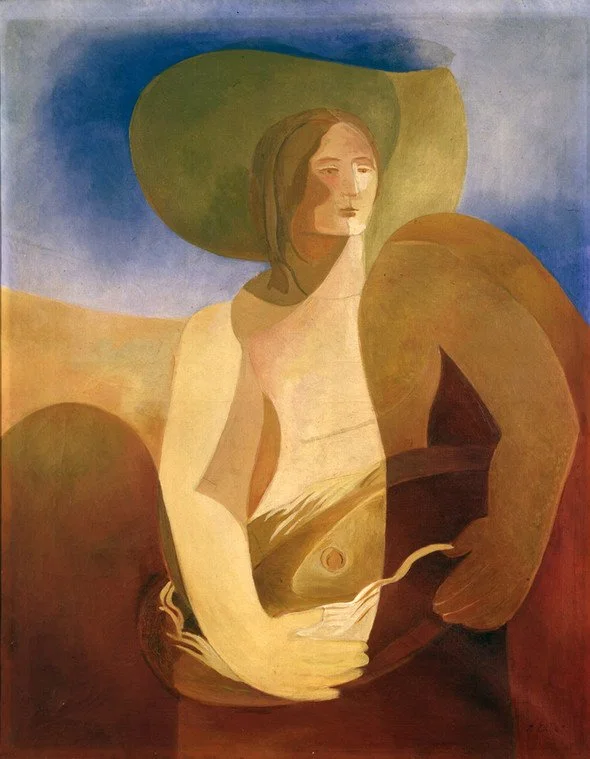
Aleksandra Ekster
Woman with fish, 1934.
"There are more things in heaven and earth, Horatio, than are dreamt of in your philosophy."
William Shakespeare
Hamlet (Act I, Scene 5)
(1564-1616)
The intangible that is invisible, as well as untouchable, can still be audible
- Where does the Beethoven symphony go?
When the final chord of a Beethoven symphony fades into the silence of the concert hall, the music does not simply vanish; depending on the lens through which you look, it transforms, disperses, or retreats to an abstract realm.
When you leave a museum, you know the paintings and sculptures are still there. But where does Beethoven’s Third go when you are not around?
When the final chord of a Beethoven symphony yields to silence, the music does not vanish; it undergoes a profound metamorphosis across matter, mind, and cosmos. Ultimately, classical music transcends both the linear forward flow of time and Euclidean space we are used to. Thus, a musical work is a mysterious entity whose essence eludes our senses.
The Scientific Perspective: Thermodynamic and Neurobiological Transmutation Physically, a symphony is organized kinetic energy propagating as longitudinal pressure waves. As instruments fall still, the hall’s surfaces and listeners absorb these vibrations. Through acoustic friction, coherent mechanical motion degrades into incoherent thermal energy—the symphony literally survives as a microscopic rise in the room’s temperature. Simultaneously, before dissipating, these waves strike the human ear and transduce into electrochemical action potentials. The symphony migrates into the synaptic architecture of the audience, triggering neurochemical cascades and consolidating into memory through synaptic plasticity. The air empties, yet the music persists as warmth in the room and rewired neural circuitry in the listener.
The Traditional Perspective: Ontological Return and Cultural Lineage In classical aesthetics and musical Platonism, a performance is merely a temporary sensory instantiation of an eternal, abstract form—a rigorous architecture of mathematical ratios and harmonic tensions. The orchestra acts as a conduit, translating this ideal structure into physical reality. Once the musicians stop, the symphony retreats intact into its Platonic realm and its notated score, awaiting future awakening. Concurrently, in the Aristotelian tradition of catharsis, the work embeds itself within collective cultural memory, shaping human emotional literacy and interpretive lineage long after the acoustic event concludes.
The Unorthodox Perspective: Spacetime Permanence and Causal Imprint Modern theoretical physics reveals an even deeper permanence. Under the conservation of quantum information, every molecular collision displaced by Beethoven’s symphony frequencies permanently alters the universe’s unfolding causal state; the symphony’s physical signature is woven irreversibly into the cosmos. Furthermore, within Einsteinian four-dimensional spacetime, past and present coexist eternally. The performance never truly ends—it remains permanently anchored at its exact spacetime coordinates, a four-dimensional sculpture of vibrating air, while centuries of resonant frequencies subtly season the concert hall’s wood and plaster, leaving an enduring structural imprint inside the architecture itself.
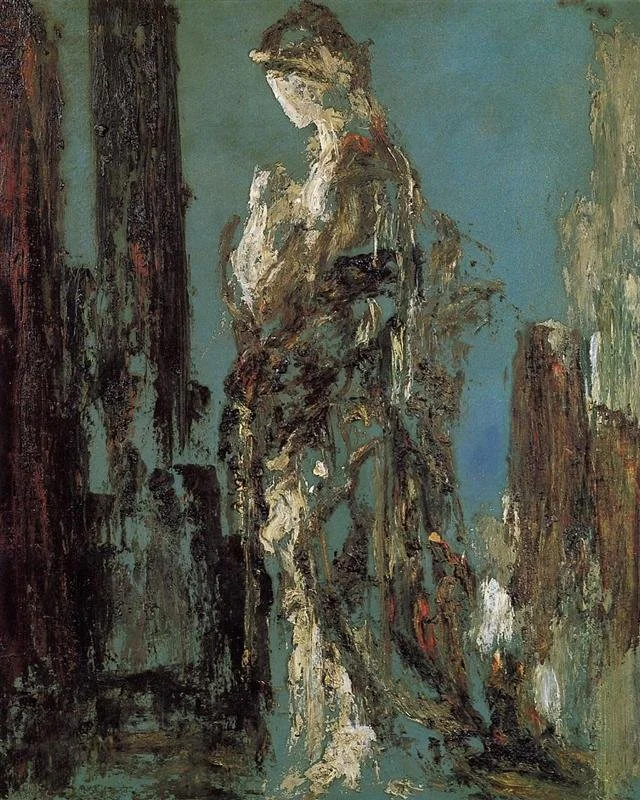
gustave moreau study of helen, 1890.
“All truth is comprised in music and mathematics.”
Margaret Fuller
(1810-1850)
Musicable, Beautifiable, Harmonizable
EuMuse is an educational and implementation platform organized around modular “music micro‑moments”—short, intentional listening practices that can be woven into daily life as precise interventions. Each module is grounded in scientists’ research on rhythm, tempo, mode, attention, memory, emotion, and acoustics and is designed to be:
Personalized: aligned with an individual’s goals—e.g., stress reduction, focus, creative problem‑solving, emotional processing, relaxing
Context‑aware: adapted to specific environments such as homes, clinics, educational institutions, hospitals, workplaces, or public spaces
Measurable: may be linked to clear outcome metrics such as anxiety scores, learning retention, productivity markers, or patient recovery indicators
With the EuMuse system, practical wisdom is similar to the kind of skill that a craftsman needs to build furniture, a boat, or a clay vessel; a weaver to weave a cloth; or a goldsmith to design a chain. Except that practical wisdom is not only a technical or artistic skill. It is an aesthetic and ethical skill—a skill that enables us to discern how to listen, respond responsibly, and resonate with the idea that music, like health (or wealth), is a state of being and not objects to have.
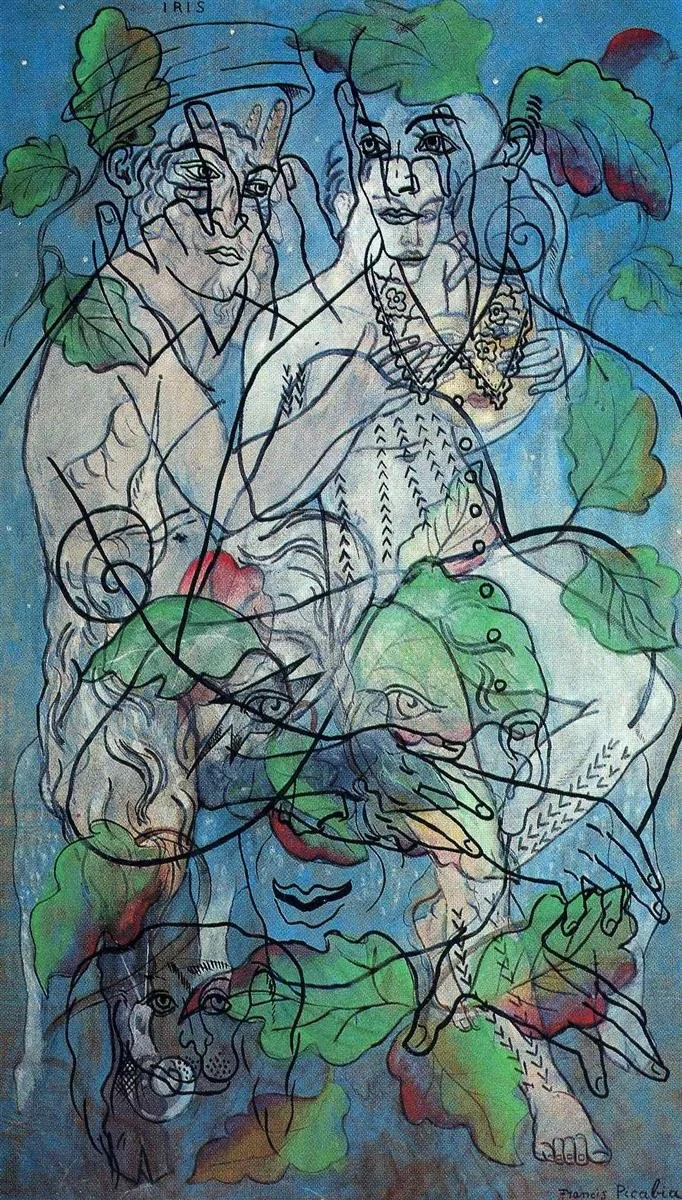
francis picabia
trice, c.1920.
"All matter originates and exists only by virtue of a force... We must assume behind this force the existence of a conscious and intelligent Mind."
Max Planck
(1858-1947)
The Music Universe in the EuMuse Musings learning environment consists of:
Sound Journey - EuMuse science-based goal oriented music listening modules
Perspectives - short informational texts covering interesting topics about music and sciences that
showcase the expansive nature of what we do here and the lens through which we can see our world
Imaginal Inspirations - Artwork - public domain
The purpose of this series is to stimulate the students’ (late 14c., studient, "studious person”, “one who pursues knowledge”) critical abilities in order to enable them to appreciate the beauty and excellence of a work, to inspire coherent actions for transformational outcomes, and to induce students to attempt to produce good things themselves.
There is an effortless beauty, elegance, and flow in it. It teaches us that it is only through the consistent compounding of small daily actions that we can achieve exceptional performances.
It is our vision to question and open cracks in the certitudes of our modern worldview.
It is our commitment to fostering a culture of continuous learning and exploration.
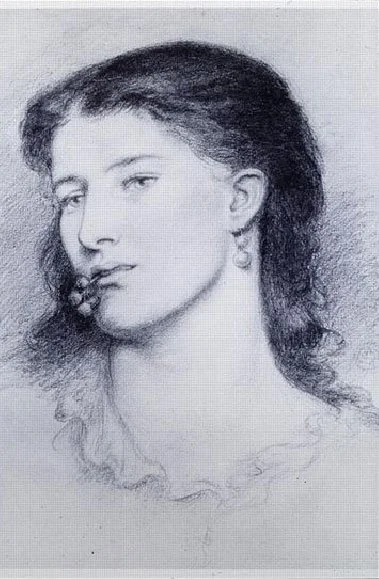
Dante Gabriel Rossetti
Aggie, 1877.
“One has to do something new
in order to see something new.”
George Christoph Lichtenberg
(1742-1799)
Thus, this invitation goes much deeper than mere expertise of music sharing – i.e., guiding through the music listening process. The main aim of EuMuse is to delve into imaginative capacities of audiences, honoring creativity and power, and demonstrating the art of listening. The EuMuse system starts with the idea that the way we evolve our ability to listen will be the way we evolve as human beings.
Why “The half-known hinders knowing. Since all of our knowing is only half, our knowing always hinders our knowing.” Johann Wolfgang von Goethe (1749-1832)
Premise “Do you know that our soul is composed of harmony.”
Leonardo da Vinci, Notebooks (1451-1519)
How “If I have seen further, it is by standing on the shoulders of giants” Sir Isaac Newton (1642-1727)
Driving force “Without music, life would be a mistake.” Friedrich Nietzsche Götzen-Dämmerung (Twilight of the Idols) (1844-1900) “Music, the only Force, which links and makes infinite worlds alive”. Giordano Bruno (1548-1600)
What to expect As much or as little as you put into it. One cannot hear noise and music at the same time, but once you hear something you cannot “unhear” it.
Grateful for your attention, described by Simone Weil as “the rarest and purest form of generosity”
Marina de Moses