
Euterpe the Muse of Music, called “giver of delight” Pompei image (c. 54–68 CE)
“To apply oneself to great inventions, starting from the smallest beginnings, is no task for ordinary minds; to divine that wonderful arts lie hid behind trivial and childish things is a conception for superhuman talents.”
Galileo Galilei (1564-1642)
In contemplating the mysteries of music, we are also thereby contemplating the mystery of ourselves. Because of this, easy answers tend to be irrelevant.
It Begins With Curiosity.
What is music?
“Music is the one incorporeal entrance into the higher world of knowledge that comprehends mankind, but which mankind cannot comprehend.” Ludwig van Beethoven (1770-1827)
“If I should ever die, God forbid, let this be my epitaph: The only proof he needed for the existence of God was music.” Kurt Vonnegut (1922-2007)
“The man that hath no music in himself, Nor is not moved with the concord of sweet sounds, Is fit for treasons, stratagems, and spoils; The motions of his spirit are as dull as night, and his affections dark as Erebus: Let no such man be trusted. Mark the music.” Lorenzo in The Merchant of Venice by Shakespeare (1564-1616)

“The Triumph of Time” - illumination from Petrarch’s Trionfi by a painter known only as ‘The Master of Petrarch’s Triumphs’, early 16th cent.
Sounds are what we hear, music is how we think, link, and feel. Similar to the pictorial images that emerge from the pixels, but they’re not identical with them - music is much more than a matter of acoustical brain stimulation. And it’s a fallacy to think you can understand pictures by reducing them to their pixels or music by reducing them to sound waves. On the contrary.
Hearing is essentially a passive, indiscriminate response to sound, i.e., we have the sound and music in our life (noise, environmental sounds, background music) that happens to us passively and by chance.
Listening, on the other hand, is an active response to the phenomena of sound; it focuses in on certain sounds to the exclusion of others. It involves the will, as well as a neurological process.
Conscious music listening – Goal-oriented Music Listening (GoML) i.e., having music in our lives by choice and design is a skill attained through the same deliberate practice as any other pursuit of human excellence.

Jacek Malczewski a woman in a grove 1917.
“A rock pile ceases to be a rock pile the moment a single man contemplates it, bearing within him the image of a cathedral."
Antoine de Saint-Exupéry (1900-1944)
It Begins With Enthusiasm
Music That Does Good
The word enthusiasm comes from the Greek roots en (in or within) and theos (god). Combined, they form the Greek word enthousiasmós, which literally translates to "divine inspiration," "God within”.
EuMuse is a long‑horizon project devoted to the science and philosophy of music and to translating that understanding into concrete solutions for individual and societal flourishing. It brings together musicology, philosophy, psychology, neuroscience, physics, biology, anthropology, acoustics, and archaeoacoustics into a coherent framework that explains how music operates—physically, cognitively, emotionally, culturally—and how we can use it with intention.
We create, co-create, and innovate – cultivating desirable, meaningful futures through music and sonic designs. Three decades. Thousands of conversations and listeners. One integral journey towards harmony and beauty.
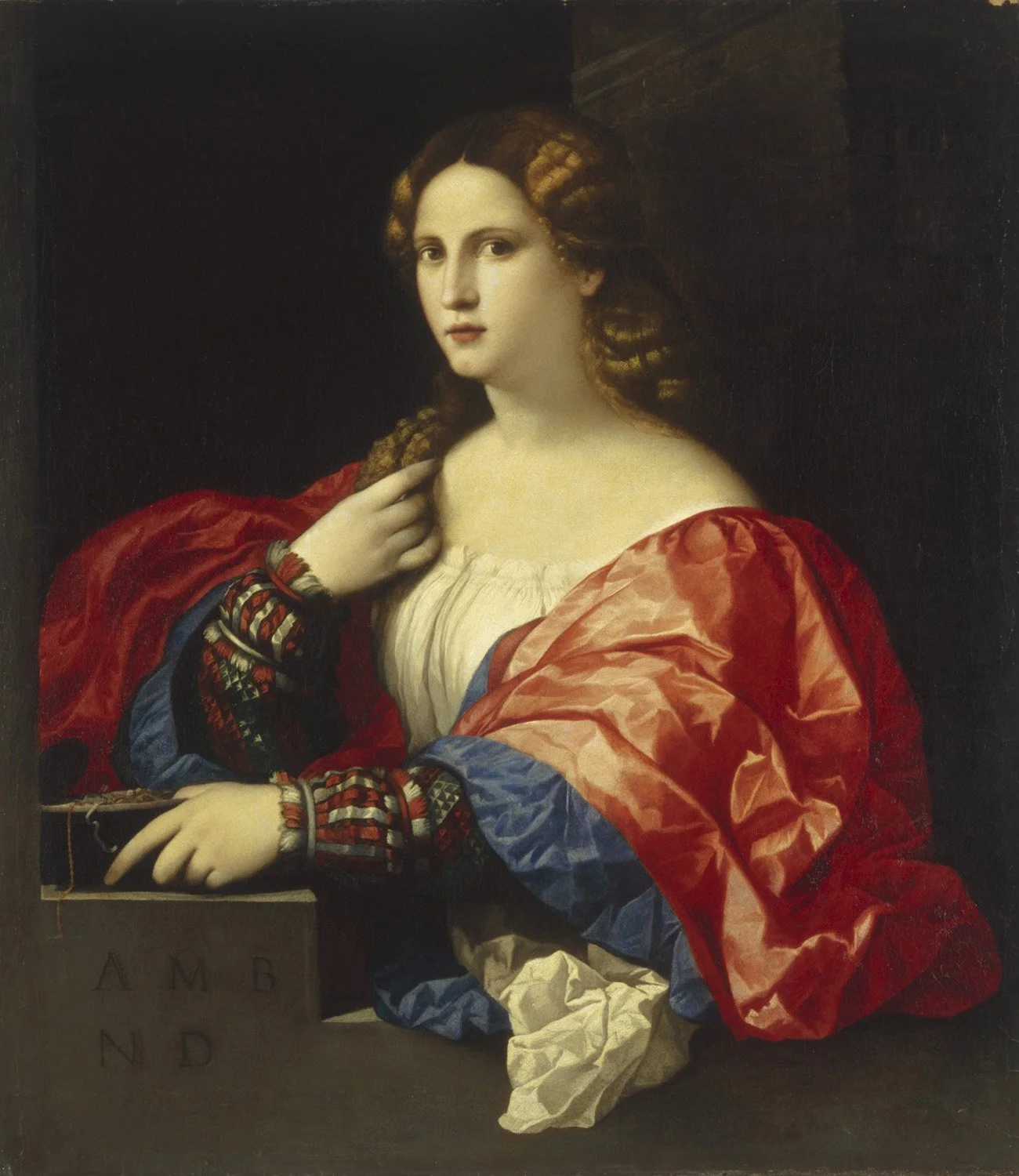
Palma Vecchio La Bella 1520.
“Beauty awakens the soul to act.”
Dante Alighieri (1265-1321)
It Begins With Resonance With Beauty
If this is an age of transitions, there is an even greater need to reflect on all that is timeless and eternal and what is not.
The human need to surround ourselves with beauty is not a superficial luxury—it is a biological and cosmic necessity. When we seek beauty, harmony, and art, we are actually trying to align our internal state with the fundamental frequency of the universe.
The idea that the universe is created out of sound or music (and therefore is music) is a very ancient one.
Mankind has long used music in all sorts of ways: to celebrate, to dance, to pray, to mourn, to soothe or excite, to infuse courage, or to unite.
Historically, concepts like harmonia and musica universalis framed music as a reflection of cosmic order, linking the microcosm of human experience to the macrocosm of the universe. EuMuse stands in this lineage while remaining firmly evidence‑based. It explores how harmony, proportion, and rhythm organize both music and architecture, and how modern noise pollution and fragmented listening environments disrupt these patterns with measurable effects on cognition and wellbeing.
Or, in the words of Albert Einstein: “We all dance to a mysterious tune, and the piper who plays this melody from an inscrutable distance—whatever name we give him—Creative Force, or God—escapes all book knowledge.”

Henri Martin Gabrielle at the gate 1910.
“A mind that is full of conclusions is a dead mind, it is not a living mind. A living mind is a free mind, learning, never concluding.”
Jiddu Krishnamurti (1895-1986)
It Begins With Learning
Knowledge is an ability. So if we want to understand what knowledge is and why we value it, we need to ask what its ability to do is. Instead of asking (primarily) how it can be certified or acquired, we can ask how knowledge can be applied, expressed in the infinitely varied circumstances of human life.
Wisdom spreads not by force but by inspiration. Three main principles define the EuMuse work:
Resonance — the alignment between external pattern and internal state.
Entrainment — the synchronization of attention, breath, and physiology with temporal order. Timbre — the qualitative field through which structure becomes perceptible.
These are not metaphors. They are operational conditions through which sound organizes the human system.
Modern science confirms fragments of this process: shifts in attention, modulation of stress, markers of neuroplasticity. Ancient thought names its continuity: order, proportion, vibration. Yet the central bridge remains unresolved—how physical oscillation becomes the inner certainty of I am hearing this.
We do not resolve this by abstraction. We approach it through practice.
Listening to music is a skill-intensive art. Persistence and determination are mirrored in the modern science data. As an example, large-scale studies and meta-analyses of musicians find that deliberate practice (focused, goal-directed work on specific weaknesses with feedback) accounts for roughly 21% of the differences in performance among players. The rest is shaped by a combination of factors, including individual aptitude, the quality and structure of practice, instructional guidance, and other environmental and genetic influences.
Despite its popularity, the "10,000-hour" figure - roughly three hours a day, twenty hours a week for ten years - is not a universal threshold; rather, it is an average from early studies of great violinists.
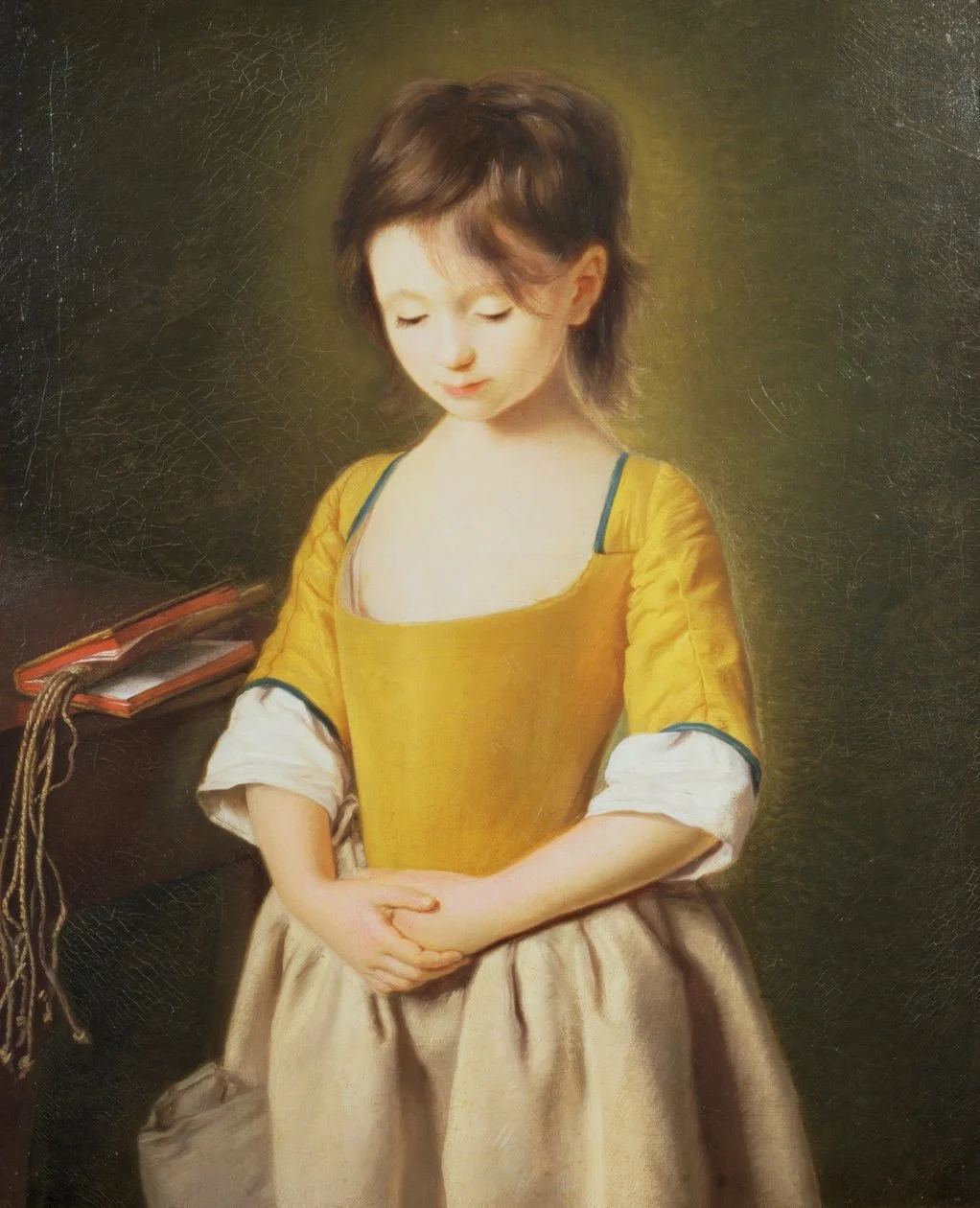
Pietro Antonio Rotari Portrait of a Young Girl La Penitente, 1750
“Our discussions are about the sensible world and not about a world on paper.”
Galileo Galilei (1564-1642)
EuMuse ~ Music That Does Good
Music has always been about exploring the unknown and learning by doing, so the EuMuse methods are geared towards action.
Why? Even if we act to erase material poverty, health issues, conflicts, and lack of education, there is another great task – it is to confront the poverty of beauty, purpose, and dignity that afflicts us all.
EuMuse is a unique educational and implementation solution. A science-driven platform for goal-oriented listening to music helps people understand and use music to their highest advantage. EuMuse – Beauty (aesthetics) and Ethics as scientific variables.
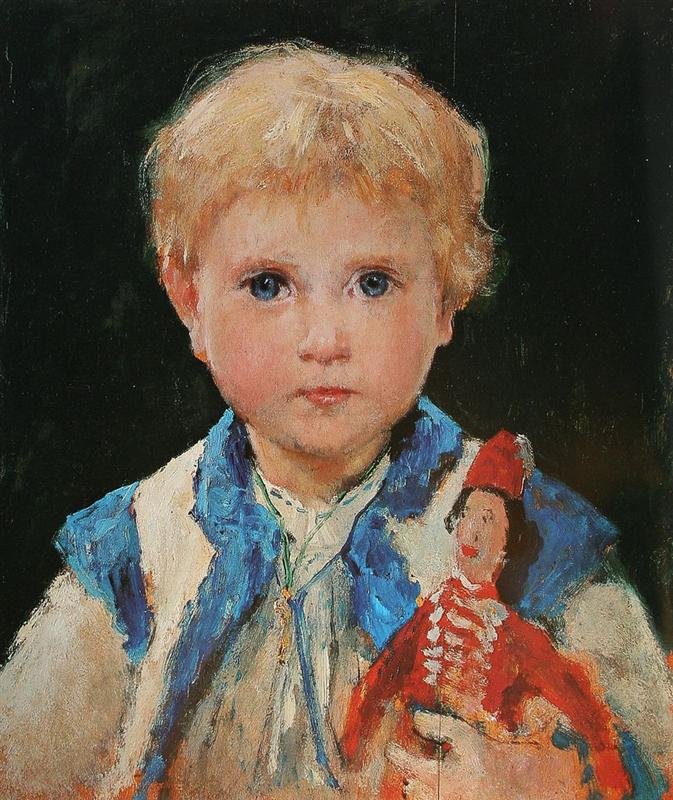
Albert Aker Girl with jumping jack (Marie Anker) 1875.
“We trust that the magic of sound will contribute an ever greater measure to the relief of human suffering.”
Robert Assagioli (1888-1974)
Expectant Mothers, Babies, Children
How to harmonize and improve babies’ well-being in order to support their cognitive, emotional, physical, and social growth
Scientific research – Highlights
EuMuse music modules reside in a complex web of dependencies and interactions. Every single music module represents a micro-learning moment and foreshadows a much larger transformation.
With music inherently multi modal, music is the ideal brain training for children; changes in higher order cognitive functions can occur in days, weeks and years; babies appear to have a neural basis of understanding music, infants respond to pitch and melody, they can distinguish scales, chords and consonant combinations; babies recognize tunes played to them for several days; very young children can perceive complex music rhythms from different cultures but lose this ability if not exposed to it before age one; knowledgeably chosen music has an immediate and positive effect on the oxygen saturation levels, heart and respiration rates of premature infants;
fetuses are conditioned to music perception while still in the womb by the observed intense physiological music responses of the mothers, from 28 weeks, i.e. at the start of the third trimester of pregnancy, the heart rate of the fetus already changes when it hears a familiar song, from 35 weeks, there is even a change in its movement patterns;
after training in childhood 1 to 5 years, adults increase brain response to complex sounds, they are more able to hear the fundamental (lowest frequency in a sound,) crucial for speech and music perception, these people also hear better in noisy places and are better listeners later in life; when the musical training begins before age seven, neural systems are created that last a lifetime.
Meta-analysis showed that scientifically based, knowledgeable music exposure had a significant influence on well-being and quality of life in preterm infants in the Neonatal Intensive Care Units (NICU). These interventions have been considered a non-pharmacological and non-invasive treatment. Prenatal music exposure leads to long-lasting changes in the brain after birth; according to published results (USA, Europe), medical imaging reveals that the neural networks of premature infants who have listened to the music, and in particular a network involved in many sensory and cognitive functions, are developing much better.
Neonatal outcomes: Reduced number of days to discharge; reduced pain response behaviors Increased weight gain; improved Brazelton scores Enhanced parent/infant intimacy; improved oxygen saturation Increased breastfeeding rates and formula intake Stabilized blood pressure; stabilized heart rate Stabilized respirations; increased maternal reports of calmed infants
Maternal outcomes: Reduces maternal stress and anxiety; reduces maternal depression Enhances maternal/fetal relationship

egon schiele
girl in black pinafore, wrapped in plaid blanket 1910
“There are two kinds of music. Good music, and the other kind.”
E.K. “Duke” Ellington
(1899-1974)
Wonderful, Wired & Wondrous
Music is not a substitute for maternal care, medical assistance, or social responsibility. But the ways people listen, make music together, attend to structure and expression, and encounter perspectives beyond their own can contribute to the capacities that sustain human relationships. The larger question is how cultural and educational practices help us develop not only knowledge and skill, but also attention, discernment, sensitivity, and responsibility toward others.
Perhaps leaders of today need a musical capacity to be creative and proactive in a way a group of jazz musicians improvises together. A number of separate individuals, all making their own decisions, act together as a whole. Choices are made from moment to moment, both by the group as a whole and by the individuals within it. For jazz musicians to improvise together, they need to listen attentively while expressing their individuality in a way that contributes to the overall sound.
We would argue that perhaps the most productive debate we can have isn’t one of good versus evil – the debate should be about the values instilled in the people and institutions creating new technology.
We can choose humility over arrogance, assume good intentions among one another, and though we will have many differences of belief and perspective, we can choose to always treat one another with respect.
We can choose Music that does Good.
Marina de Moses